
The Stack: Why Rights Come From God, Not Government
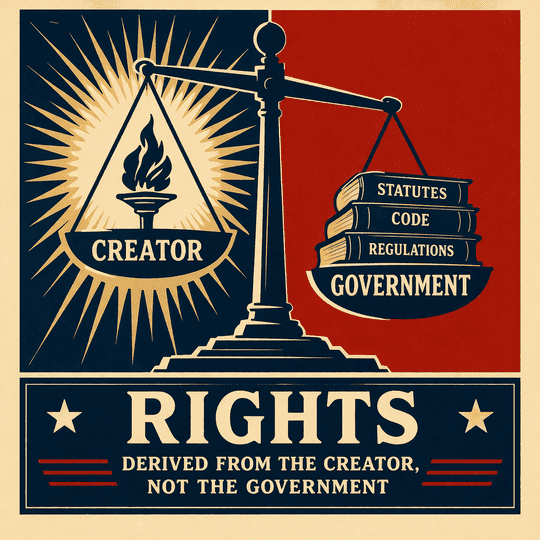
In today’s episode, Todd Huff revisits a foundational idea at the heart of American liberty: our rights do not come from government—they come from God. Building on previous discussions in this series, Todd explains why this distinction is critical and how misunderstanding it leads to dangerous political consequences.
He addresses a common objection—that acknowledging God as the source of rights leads to a theocracy—and clearly outlines why that claim falls apart. A government that recognizes natural rights is not the same as one that enforces religion. Instead, it protects the freedom of individuals to live according to their conscience.
Todd also explores the role of moral law, drawing on insights from C.S. Lewis, and explains why societies must be grounded in objective truth rather than shifting political preferences. When rights are treated as government-created, they become unstable, negotiable, and subject to power. This episode offers a clear, principled framework for understanding liberty and the proper role of government.
🎧 Listen to Today’s Episode
📰 Stack Links
What Are Natural Rights?
Want to get Stack links and content delivered to your inbox each weekday?
Subscribe to The Inner Circle. It’s free.
📝 Transcript: Why Rights Come From God, Not Government
The Todd Huff Show – March 30, 2026
Host: Todd Huff
Todd Huff: All right, my friends. Conservative, not bitter. Indeed. It's a pleasure to be here. I want to resume what we've been doing here. We took a little bit of a breather from it for a couple of episodes to catch up on what was happening in Iran and just catching up on some current events. But we have been going through and really giving a framework, a lens, a know why you believe these things that we believe when it comes to conservative principles, values, those sorts of things. I want to revisit that today. I think this is part, honestly, I don't know, I want to say part nine.
Todd Huff: If you want to go back and listen, the easiest way to do that, the best way to do that, to make sure that you get all of the content and, of course, the things that we're doing from this point forward, including the things that we write about in the newsletter that we don't have time to do here on the program, you just text the word Truth to 3177-8510-3031-7785, 1030. You'll get access to the archive. You can find it on the website, too. But this will keep you posted on anything we do with this series or anything else, for that matter, moving forward.
Todd Huff: So that's what we're going to do today. And it's good to be here, my friends. If you're dealing with discomfort or just tired of living off prescriptions and managing those side effects, you are not alone. A lot of folks are looking for something natural they can trust. That's why we've partnered with Christopher's Organic Botanicals, a family run kratom company rooted in truth, tradition and transparency. They partner directly with farmers, the farmers who grow the product in Indonesia, and they lab test everything.
Todd Huff (Sponsor): They lab test everything before it ever reaches your hands. There's no hype, no synthetics, no funny business, not like a lot of those shady sellers you will find out there giving kratom a bad name. Christopher's provides the real thing, done right. So if you've done the research, if you're comfortable, a good place to start is with their starter pack. And all you have to do is go to Christopher's Organic Botanicals dot com. Use code Todd huff. You'll save 10% on your first purchase. Christopher's Organic Botanicals dot com. Truth, tradition, transparency, my friends.
Todd Huff: Okay. The last time we did this, we talked a little bit, and I have to rehash this or recap this a little bit just to get us on the same page here as we get going today. But I talked about the source of our rights. And it's interesting to me. You have a group of people who are hell bent on making sure that there is no reference or need to reference God or the Creator. And they'll often say, Todd, the Constitution, the US Constitution does not mention the word God, and it does not.
Todd Huff: However, the Declaration does four times. And all, but I believe four of the state constitutions mention God or the divine, divine providence. It mentions basically a deity, God, in 46 of the constitutions and others. I think the other four make an illusion to God. So to say that he's not there is living in a fake reality, fake news. It's not real. But it doesn't mention God in the Constitution. But the Constitution again, understand what the Constitution is for.
Todd Huff: The Constitution is to give our government the framework. The Declaration is more of an argument about the ideas that this nation embraces. And as I mentioned, it mentions God four times. In fact, the Declaration says that our rights come from our Creator. In other words, they don't come from other people. They don't come from men who start governments, run governments, make rules, whatever. These are things that we are born with, that we have by virtue of being a human being. This is important. This is under assault.
Todd Huff: You may not see this a lot, but you're going to see it more, especially as we get closer, maybe not to this election, but to future elections. There's a movement away from accepting this truth. And if we lose this truth, which the truth doesn't, listen, as I said before, truth doesn't care about what other people think about it. Truth is true whether 100% of the people agree or disagree with it. It doesn't care. It doesn't have feelings. It is just an immovable reality.
Todd Huff: Now we can deny it. We can hide it. We can pretend that we don't see it. We can act like we've created some sophisticated intellectual argument whereby we don't have to deal with these realities. But my friends, it is inescapable. Truth is what it is. Truth is the nature of just how things are. And our rights come from God. Now here's what I want to get to today. We did a whole episode on that, and you can go back in the archives, and I told you how to do that earlier if you would like to do that.
Todd Huff: Now, I mentioned this today because I want to talk about something that some people, and listen, there's different types of people, right? There are people who really think, man, Todd, this sounds like a theocracy. We don't want a theocracy. By the way, you're right. We don't want a theocracy. But we'll talk about that. Others just want to put up a smokescreen. They know what's not an argument for theocracy to say that our rights come from God, but yet they want to say whatever they can to get people to not endorse this idea.
Todd Huff: They want you to think it's dangerous. They want you to think that if you believe in the divine origin of our rights, that you somehow are some evil Christian nationalists who wants to force everybody into your religion. And that, of course, is contrary to what the founders saw. It's contrary to what the pilgrim sought. We tell every November, the day before Thanksgiving, I love this tradition, by the way. I tell the real story, the true story of Thanksgiving.
Todd Huff: I do this for several reasons. One, I love the story. It's a great teachable moment. Two, it carries on the tradition of the one that influenced me to do this program, Rush Limbaugh. He did this every Thanksgiving week as well. It's one of the ways, one of the, that's probably the biggest way that we pay tribute to his memory and his honor. And that matters to me. It takes me back down memory lane when I remember him telling me, well, not me personally, but remember listening as he told the story. And it mattered to me.
Todd Huff: Oh, I loved listening. That was my favorite episode every year. It's my favorite episode to produce here every year. I think I probably shouldn't have a favorite episode, but I certainly do. That's the one. But I enjoy doing the program, but I love doing that one for lots of reasons. And so the pilgrims fled, which is what I was getting to. The pilgrims fled basically religious persecution. They were trying to be forced, well, they were not trying to be, others were trying to force them into the official Church of England and all this sort of stuff.
Todd Huff: They fled Holland first and eventually here. We tell that whole story again on the eve of Thanksgiving. So it raises the question at some point, though, this question of, well, the rights that we have come from God. We don't want a theocracy. How do we reconcile this entire thing? So I want to do that. How is this not a theocracy? So recognizing that our rights come from God is not the same thing as a theocracy.
Todd Huff: So recognizing that our rights come from God is not the same thing as a theocracy. So it's helpful, I think, to understand what is, what is the definition of a theocracy. What makes something a theocracy? What are the, I guess, the telltale signs that this something is a theocracy? Well, friends, we don't have that, and I don't, we shouldn't. We shouldn't desire that. Incidentally, I know recently we've been talking about the Islamic Republic of Iran. That is a theocracy.
Todd Huff: So in a theocracy, authority is believed to come ultimately from a deity or divine source. Clergy or religious officials actually lead the government. This is where the ayatollahs in Iran come into play. And laws are based on religious texts and or doctrines of a particular religion. In that case, in the case of Iran, on the religion of Islam. Now, so a theocracy is a form of government in which religious leaders or a religious system hold political power and the state is governed according to religious laws or divine guidance.
Todd Huff: Now the nation of Israel in the Old Testament had a theocracy initially. That's the point of the nation of Israel was for God, Yahweh, to be their king. And the people resisted. There's a whole book, right? Actually, a whole series of books written about how the people resisted what it was that God had instituted for them, thinking that they knew better or they had other preferences or whatever the case may be. Human nature takes over, our sinful nature, whatever else, however you want to slice that up, but that's ultimately what happens.
Todd Huff: And they messed up what could have been a wonderful thing, but we've messed up things here on our side as well. But we don't want a theocracy. We want something that is predicated and based upon liberty. And so you have instead of the rule of force to say everybody here has to follow the laws of a particular religion, we say here that you are free to live in accordance with your conscience. You have liberty. And government has a certain role. We've been through that.
Todd Huff: The most basic role that government has is to protect its citizens. Protect its citizens from, well, from anarchy, from people who are trying to cause them harm domestically, people who are trying to take away their rights. This is the basis, the starting point of a government. And also on top of that, and in addition to protecting people and securing the rights and so forth, there's an external or an international aspect to that, too. Protect our borders. Protect the nation from foreign threats, that sort of thing.
Todd Huff: And so that's the fundamental starting point of a government. And this again, the idea ultimately is that we are created to be free, and that's how, that's recognizing how God made us. Now, as a Christian, as a follower of Christ, as one who believes the Bible is the inspired word of God and that Jesus is the Messiah, those things that are central to the Christian faith, that is central, of course, to the Christian faith. But we have, God made us free. Even from a Christian perspective, we have free will.
Todd Huff: We have the ability to decide what we believe, what our priorities are, whether or not we are going to have a relationship with our creator or not. God respects our choice. That's really what this entire problem that we have on this side of heaven is about from a biblical perspective. God made it one way. We ruined it by not holding up our end of the bargain, by rebelling and not listening to God. That was the choice that we made, and it's the choice that we all make individually as well.
Todd Huff: And this country respects the freedom of choice. Now we say that, you're right, I've talked about this before. This is what they actually used to teach us. I don't know if this is being taught anymore, to be candid, but it actually makes a lot of sense. They used to say that your freedom to swing your arm ends where my nose begins, or vice versa. My freedom to swing my arm ends where your nose begins. And so that's how this is supposed to work.
Todd Huff: And we have this concept of liberty, but we also have to have some structure. And where this begins to get a little bit more, I don't want to say complicated, but where you have to think these things through a little bit is when you realize we have to have some basis, some basis upon which we are trying to build a society, build a government, a framework. And just because you accept that rights come from God, that does not mean that you've suddenly become someone who endorses a theocracy.
Todd Huff: Having a government that recognizes rights come from God is not the same as having a government church, a state run church that you're required to be a member of or some such thing. That is not remotely close to the same thing. And people who are making this argument that saying our rights come from God is akin to having a theocracy, they know that this is silliness. They know that it is. They want to run from any form of divine truth, whatever form that takes.
Todd Huff: So government does not enforce theology. Government does not force its citizens to have a faith, a certain faith and all that. Now, our founders knew that liberty is at some level incompatible with people who do not have, I'm going to use the word, a religious framework. But people, in order for people to have liberty, they have to have something in addition, something else within them, if you will, and I would say the spirit of God for those who believe in his son Jesus, to basically be a safeguard against abusing your freedom.
Todd Huff: Because that's what we can do. And it's interesting, the Bible talks about freedom, by the way, but it's not what we often think. We often think I'm free to do this, that, or the other. The Bible talks about, well, if we choose to live a certain way, we actually, we might think we're being free to make these choices and indulge ourselves in certain behaviors, but oftentimes those things make us, we become slaves to those sins, the Bible calls them. But regardless, the government's not trying to enforce a theology.
Todd Huff: The other thing is, acknowledging a truth is not the same thing as enforcing religion, even if acknowledging that truth is that the rights that we have originated from a creator God, they have to, my friends, they have to come from a creator, from an almighty God or a creator. Because if they don't come from some sort of infinite source, then they themselves are conditional rights. And to say that we have rights simply because we're born in an atheistic sense, if we say that because a government has said that we have these certain rights, that that's why we have them, that's subject to change.
Todd Huff: It's subject to change the next time there's an election, the next time there's a decision to be made. If our rights are not rooted in something eternal, which would have to be God, ultimately, then we're standing on some very shaky ground. We're not building upon a strong and firm foundation. So acknowledging the truth that our rights come from God is not the same as saying that you have to believe in certain things from a religious perspective. And people know that.
Todd Huff: For example, you read the Ten Commandments. There are laws in the Ten Commandments, by the way. If you've not read the Ten Commandments, you can go to what, Exodus chapter 20. And these are in a couple different places in the Bible, but Exodus chapter 20 will give you the Ten Commandments. If you look at the first four commandments, they're what people often refer to as vertical commandments. It's the way that we're to relate to our creator. You have to take the Lord's name in vain, to keep the Sabbath and those things, and then that's the first four.
Todd Huff: The next six are the horizontal commandments, which is how we're to treat other people. You're not supposed to bear false witness against your neighbor. And you'll find rules, so to speak, rules like that. So you'll find that there are things, thou shalt not murder, for example, is one of the Ten Commandments. And that's incidentally, there's a misunderstanding. Thou shalt not kill is the way that it's sometimes translated, but it's actually more accurate to say thou shall not murder.
Todd Huff: Murder is the unintentionally, the intentional taking, the intentional, unjustified taking of a life. There is killing. In fact, in that same book, the book of Exodus, there are examples beginning in chapter 21, which is immediately after the Ten Commandments. You'll begin to see if you read the next few chapters that there are verses about when capital punishment should be instituted against people who commit certain crimes. So you'll see quickly that there are, just because there's a law against murder, you shouldn't just say that there's a law against all killing.
Todd Huff: Or that all killing is something that God prohibits, because that's not the case. Defending yourself, defending your loved ones against someone who's trying to harm them or even kill them is certainly not an act of immorality. But to say that something, if you can find it in a religious text, as you would find in the Ten Commandments in particular, those six laws about relating to other people, just because it exists in the Bible doesn't mean that you would outlaw, surely that's not what that means.
Todd Huff: Just because it's in there suddenly, can we not have a law against religion or, excuse me, against murder? Or does that make it some sort of a violation, a theocracy, if you will, because it's in a biblical text? I got more to say about this, my friends. So if you're concerned about high cholesterol, if you're concerned about your heart's health, if you're just aging, friends consider taking Soltea. I've started taking it as I've aged, as I've slowed down a little bit, I want to make sure that I stay proactive.
Todd Huff (Sponsor): And it's got a great track record, great history of helping people lower their cholesterol, maybe able to do the same thing for you. You can go to Soltea dot com, S-O-L-T-E-A, promo code Todd's going to get you 50% off your first three month supply, and you'll get free shipping to boot. That's soltea dot com, S-O-L-T-E-A, promo code Todd, 50% off your first three month supply and free shipping.
Todd Huff: All right, my friends, quick time out for me. You're listening here to Conservative, Not Better talk. I'm your host, Todd Huff, back in just a minute. Welcome back, my friends. You know, one of the biggest challenges we as conservatives have is finding ways to ensure our values align with the way that we live our lives and the things that we do. That includes how we invest our money.
Todd Huff: I like a lot what the team at 48 Financial is doing. They specialize in biblically responsible investing. This hasn't always been possible, my friends, but it is now. So you can actually invest in companies that align with your principles, your faith, your values. 48 Financial screens those companies out that don't align with your faith. That prevents you from funding things, investing in things that are antithetical to what you believe in.
Todd Huff: They do all the legwork, all the heavy lifting. All you have to do is basically tell them this is what I'm invested in today and these are my values, and they will tell you to what degree your investments are in alignment with your values. So to take that assessment, you'll simply go to 48financial dot com slash Todd. That's 48financial dot com slash Todd. 48 Financial, because your money should work for your values. And as I've said, my friends, it certainly your money certainly should not be working against those values.
Todd Huff: Okay, so going to continue where we were in the opening segment talking about, well, how we can say rights come from God without creating a theocracy. It's the job of government to be predicated and based on reality. The only place rights can come from is from God. That's the only place, from a creator. You don't have to, necessarily, although there are certainly other reasons, to have faith that we're talking specifically about the God of the Bible.
Todd Huff: You don't have to get there first. You just have to understand specifically to the Bible that the only place these things can come from, that ensures that we have a natural right to them, if you will, is if they come from our Creator. And we know that these things, the whole concept, if you've not read, if you've not read Mere Christianity by C.S. Lewis, I strongly encourage you to do that. C.S. Lewis has a wonderful explanation for that that relates to this, in my opinion.
Todd Huff: And he talks about how if someone wrongs us, we immediately try to explain to them that they shouldn't have done it. And by making an argument, by appealing to them, what we're doing subconsciously is pointing out that there is some sort of a standard that we are supposed to live by. And not only do we believe in this standard, we believe that the other person believes in this standard. Hence, we try to explain to them.
Todd Huff: And if we are accused of wronging the other person, we have excuses. C.S. Lewis says a list of excuses as long as our arm. We sit there and we explain how we didn't actually violate the moral code, that the agreed upon, that somehow agreed upon moral code. That again, the only way that makes sense, the only way that that makes sense is if there is a creator who wrote that code, so to speak, on our hearts, on something eternal.
Todd Huff: It's part of the way that we're hardwired to know that we have a standard that we are supposed to live up to and also know that we've all miserably failed to do so. It's a great book. If you haven't read it, I strongly, strongly encourage you to do so. But government has to be rooted or built based upon truth and reality. And if we accept, if we accept, for example, that we shouldn't murder, why? I mean, get down to it, why?
Todd Huff: When you begin to ask these questions, now some people will roll their eyes and say, well, we just shouldn't kill somebody. But the question is, and you've probably heard this if you've listened to any debates with atheism and the philosophy of atheism, is murder wrong? Was Hitler wrong? You hear people ask that question in these debates. And if you don't have a moral law, which, by the way, if there is a moral law, it requires a moral law giver.
Todd Huff: Now you got a problem. Because if there is no moral law, then how can you say anything is wrong? At some point, some of these things we know so strongly that some people have a hard time getting there intellectually. I would say it's really because of an emotion, because we know something to be right or wrong so much that we can't accept that there's no moral law for it. Among those things would be murder, doing something very harmful to a child, that sort of stuff.
Todd Huff: Everybody knows this. So it's the job of government to secure these rights and to create laws and order and justice and some degree of, say, security. But when you think about national defense, government can't secure us from everything, but the government should be there to deal with those sorts of problems should they arise. These are not, this is the point, these are not just random decisions.
Todd Huff: If they're random, you might as well just get out some dice and just roll randomly or flip through a list of things that might be part of a moral society, and just wherever you land, those are the things upon which you build your society. But see, that's not the way that it works. And we all know this. We all know this. The question isn't whether government reflects moral truth. The question is, which moral truth does the government reflect?
Todd Huff: And see, now we're really getting into the nitty gritty, because, my friends, because if I've had these conversations with people who believe that government should be completely secular, and listen, I'm in agreement that government should not be the church, that government should not be forcing people into certain religions or religious beliefs, those sorts of things. Government shouldn't be trying to force people into any set of beliefs, really.
Todd Huff: But government should be aligned with truth. But there has to be, there's a version of truth that government is aligning itself with. And if the Christian version of truth is the one that's true, and dare I say, wink, wink, or there's a hint here that I'm giving you, it is true, the biblical worldview is the correct worldview. You can, of course, disagree with me. You can look into, I encourage you to look into it on your own. This is very important stuff.
Todd Huff: But I would say that it's clear that the moral framework that is accurate and true is the one that is presented by the biblical text. And so if that is the case, you can certainly begin to acknowledge what the creator God says about things in that book. Why can't you? Again, it's not forcing people to believe them, but it's laying the foundation for the moral law and the moral code.
Todd Huff: You can't get down into the level of legislating out sin, and that's not the point, but we have to establish a framework that says this, these are the things that are illegal. Here's part of the problem we have today with the growing government. We have a situation on our hands where once upon a time, when governments are new and small and just beginning to get established, you start off by writing laws that are in agreement with the moral code.
Todd Huff: Murder, bad. Self defense, good, although it's not, no one wants to be in that situation, but it's not murder, right? Theft is bad. And you begin to, you begin to make laws that go along with the moral code, the moral law. And see, those are things that you don't even really have to teach people to believe because it's already something that we do believe, that we do accept. Forget that we know it. It's simply what is. It's simply truth.
Todd Huff: And as people who are created by the same creator who made that moral law, we have an understanding of what that moral law is. And so when laws exist that prevent things from happening or are designed to prevent them, discourage them, or to hold people accountable that do these atrocious things, if those align with the moral code, then it makes sense naturally from a natural law perspective. We don't have to study books to know murder is wrong or that I shouldn't assault somebody or that I shouldn't steal from them.
Todd Huff: Right? It's when you get into the administrative state, and this is where a lot of leftists love to go, they like to want to penalize people for filing a wrong form or doing something along those lines. My friends, something that's administrative that we don't know intuitively, because as we talked about with C.S. Lewis earlier, those aren't the types of laws that are written on our hearts. Those are things that help a society run or sometimes get into the business of things they shouldn't even be messing with to begin with.
Todd Huff: But that's a much different thing than enforcing laws that are consistent with the God given moral code. I got to take a break, my friends. Quick time out. Back in just a minute. Welcome back, my friends. Third and final segment here of today's program. I hope you've enjoyed this. I like talking about these things. I think that this matters tremendously. This prevents us from making truly emotional decisions or taking emotional positions on issues that should be thought out within a certain framework that's predicated, built upon truth.
Todd Huff: And that's what we're going through here today and over, candidly, the course of this series. And again, if you want to be a part of that and get all of the background information and articles, text TRUTH to 317785, 1030. So that's where we're gonna, we're gonna wrap this up today as well. My friends, before I do that, let's be honest. When your financial world starts getting a little more complicated, you need more than one size fits all advice.
Todd Huff (Sponsor): That's where Full Suite Wealth shines the brightest. Their team specializes in working with families and individuals at your level. They offer personalized guidance that goes far beyond the basics, from private equity and private credit to option strategies and coordinated legal planning. Full Suite Wealth helps you see the big picture and make confident decisions about your legacy. It's about having a dedicated team there to guide you each and every step of the way so you can focus on what truly matters.
Todd Huff (Sponsor): Your family, your goals, your future. If you want real confidence in your financial life, visit fullsuitewealth.com. That is fullsuitewealth.com. Build your legacy, secure your future. Okay, so talking here about theocracy, the natural law, where rights come from, and really government's role. Government does not create rights. Government protects rights. Government secures rights. Rights exist first.
Todd Huff: And you can say this is the view of the founders. I would say it is the truth. Rights exist first. Government comes second. Government has to recognize those rights or it should and say, okay, how do we establish a framework whereby we can institute our government without violating the rights of the people that God has given them? That's what government should seek to do.
Todd Huff: So again, government seeks to secure rights. It doesn't invent them. It cannot invent them. It is not designed for that purpose. God gives them to us. The government then decides, should decide, how it secures those rights, how it protects those rights, how it recognizes those rights, and then how it does its job without violating those very rights. That's what's going to happen. That's how it should happen.
Todd Huff: Now, if people or government give us rights, I've been through this, I'm going to do it again, rights become political. They can change over time. It depends on the politics at the moment, who's in power. That creates instability. That creates constant turmoil and tumult and conflict. And you have different competing claims as to what rights are.
Todd Huff: We have this in America today because, again, we have an ideological cold war that's being waged in this country. And this is why we have to win this argument again. The founders won it back in the 1770s during the time of the Declaration. We need to re win this argument in a generation and in a world where people say they don't believe in God. And as I mentioned before, I don't believe in atheists. Atheists don't believe in God. I don't believe in atheists.
Todd Huff: But that's what ends up happening here is you have this fight over what a right is, and then it becomes a political thing. And then you begin to see it all unravel. You see speech being restricted. You see things shifting as far as a definition of a right. One year you have a right, so called a right, to do something. The next year you may not, again, often depending upon the political climate at the moment.
Todd Huff: And so then you've got this concept, which we also talked about a few episodes ago, where there's an expansion of entitlements. I'm entitled, then a right is not an entitlement. We went through this in a previous podcast. A right is not an entitlement. But when people misunderstand and it's not built upon truth, they begin to substitute entitlements as rights. And then once they realize that, hey, if we get a majority of people together who can say it's our right or our entitlement to basically have the wealth of one group of people who are now in the minority redistributed to those of us in the majority, then you've got for yourself a very real problem.
Todd Huff: And that's, to some degree, what we have here today. When rights come from government, by the way, they become tools for power. They become negotiating devices. That's not the way that these are supposed to be handled. So modern, there's an expansion or a changing nature of how rights are discussed, the language used about rights today. You have a right to certain things or right to services or right to certain outcomes, right to benefits or right to whatever.
Todd Huff: The right to health care. This is why I say health care is not a right. It's something we should strive to do to provide health care for everybody. But a right is not contingent upon something that someone else has to do for me. It's inherent in how I'm created, how God created me to live. And these rights are things that I am created to be able to do and choices I'm to be able to make and so forth.
Todd Huff: But that's not, that's way too much information for a lot of people today who simply say rights are something that I want. So, folks, I am out of time for the day. Hope you enjoyed today's episode. Have a great day. Thanks for listening. SDG.