
The Stack: Christian Nationalism and the Battle for America’s Moral Foundation
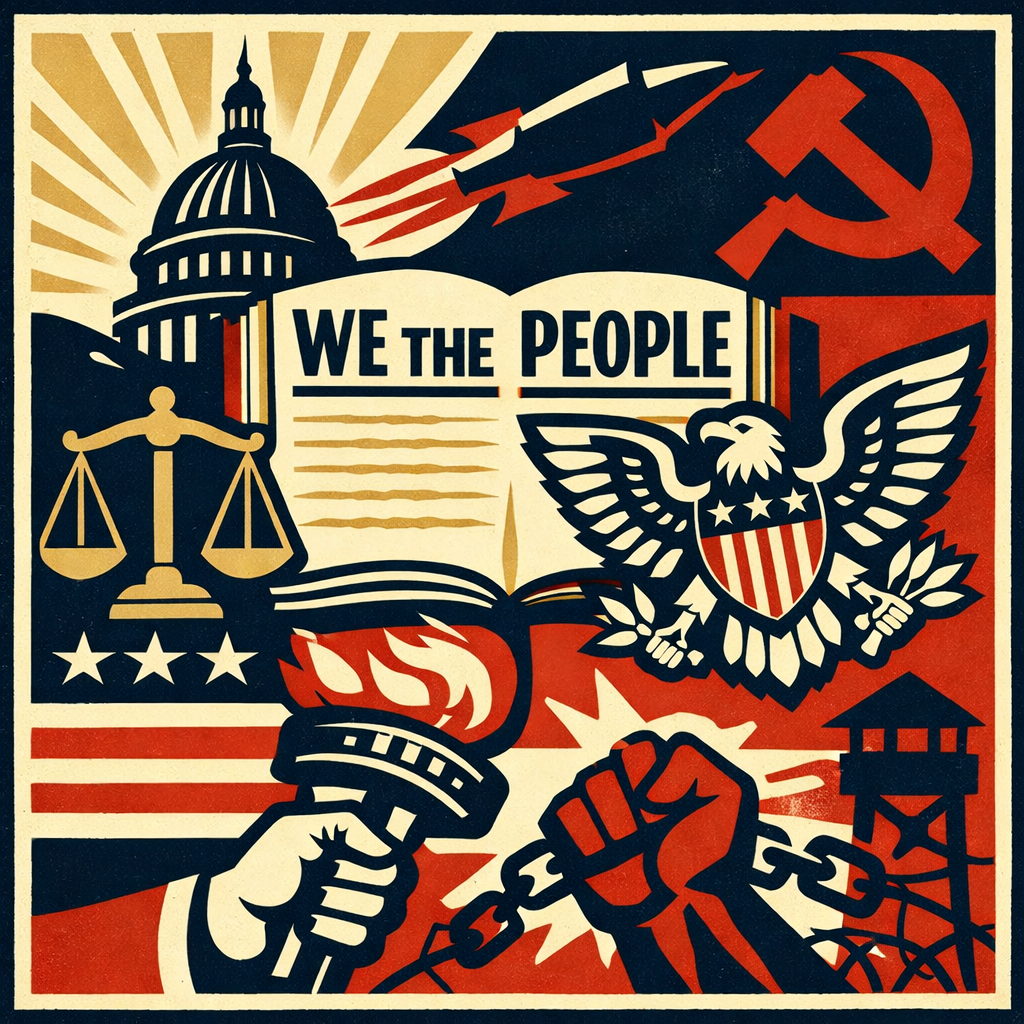
CNN is launching a documentary on the “rise of Christian nationalism” as Lent begins — timing that raises eyebrows in an election year. But beneath the media framing lies a deeper question: Where do our rights come from?
In this episode, Todd Huff explains why America’s founding documents clearly reference the Creator and why the Declaration of Independence anchors liberty in “the laws of Nature and Nature’s God.” If rights come from government, they can be redefined or revoked by government. If they come from God, government exists to secure them — not grant them.
Todd also addresses the intentional confusion between biblical moral foundations and the idea of a state-run church. Acknowledging God as the source of moral truth is not the same thing as establishing a theocracy. The real issue is this: If not the Bible, then what becomes the foundation of Western civilization?
This is a critical conversation about liberty, truth, and the future of the American experiment.
🎧 Listen to Today’s Episode
Want to get Stack links and content delivered to your inbox each weekday?
Subscribe to The Inner Circle. It’s free.
📝 Transcript: Christian Nationalism and the Battle for America’s Moral Foundation
The Todd Huff Show – February 20, 2026
Host: Todd Huff
Todd Huff: Yes, my friends. Conservative, not bitter. Indeed. This is the last day that we're gonna be in the month of February. That's not as bad as it sounds. Next week is the last week of February. We will be out. Azanai. The family will be out next week on some much needed time away. No matter what some of you might think, we work very hard here at the program. And we're taking some time away just to recharge and be with family and that sort of thing. So we'll be out next week. You're in good hands. Capable hands. Next week we've got John Crane on Monday. We've got Chris Dunham on Tuesday and Wednesday. We've got Gary Varvel on Thursday. We've got Tony Reffeitt on Friday, my friends. And so most of those folks have filled in many times, multiple times anyway, for when I'm out. I'm not out that much, but when I'm out, most of these folks are in. Tony, it's his first time, so he'll be on Friday. And again, you're in good, capable hands, my friends.
Todd Huff: Time flies, of course, when we're having fun. We're almost to the end of the first quarter, which is just a crazy thing to think about. So that's what's going to happen next week. But let's focus on today. Today I saw, well, in preparations, I think it was maybe even last night. Last night I saw an article at theblaze.com that talked about something that CNN was doing — a documentary. I think it's a series, but it's at least one documentary or something or other here for CNN, which is on the rise of Christian nationalism. It's being done by Pamela Brown of CNN, and it'll be on The Whole Story with Anderson Cooper, which that is never what you get from the folks at CNN — the whole story, anyway. That's a documentary that they are doing. And I want to talk about this today. I think that this is important. I think it's something that's relevant.
Todd Huff: I think it's an election year. It's time for them to begin to pound on the war drum, to try to scare people into thinking they're going to be forced to be Christian, go to church, and all this sort of stuff if Republicans are voted in. And there is intentional conflating and confusion that's being sown by people regarding these terms — what's really happening. And I want to talk about this because I think it's very relevant to the larger discussion of what's happening in the midterm election year. The larger political movement here. Remember, for a political party to get traction, there has to be a narrative. They have to have a story to tell. They have to be able to say, this is why you have to vote for us.
Todd Huff: And when they're not getting enough attention or enough votes, what they often do is they turn up the rhetoric. They keep turning it up until it's alarming enough to the people who hear it to say, “My goodness. My goodness, Marge, what have we gotten ourselves into? Better go to the polls and vote for any Democrat just to prevent ourselves from being forced into a theocratic state,” or whatever it is they want you to believe. And the louder the rhetoric, the more alarmist it sounds, the more concerned they are internally about the prospect of winning the next election. That's how this works. They turn up the dial as high as they need to turn it to get enough votes. And when they can't get enough votes even from doing that, they, of course, think about other shenanigans as well. But we won't get into that today.
Todd Huff: That's where we're headed, my friends. Take a moment here to remind you that we here at The Todd Huff Show, we have another division called Red, White and Brand. This is something I did years ago. Started back in 2009, long before this program started in 2015. But we had a business that helped people put their logo on almost anything. And we sold that business back in 2019. And our non-compete ran out about a year ago. And I was just doing some thinking and planning, and I thought, you know what? I think there's no reason why we can't do this again — help people with their branded merchandise, apparel, different things like that, trade show materials. And so that's where Red, White and Brand came into existence again.
Todd Huff: Your logo on almost anything. If you own a business, if you need apparel, if you need — heck, if you need print material, if you need banners, if you need promotional products — Red, White and Brand stands ready to help you. You'll save 10% with promo code Todd on your first order. What do you have to lose, my friends? Working with a great patriotic brand here that provides some high quality. We've been growing the business, my friends, and we'd love to help you as well. RedWhiteAndBrand.com is the website if you want to check out some of the things that you can get there. RedWhiteAndBrand.com. Again, promo code Todd will save you 10% on your first purchase.
Todd Huff: All right. So let's talk about this. Let's talk about what CNN is doing. And let me start by saying this documentary is scheduled to air, premiere, this coming Sunday, February 22nd. And some people, I think even the individual who wrote the article for The Blaze, was upset about the timing because this past Wednesday was Ash Wednesday, marking the beginning of Lent. Easter Sunday is on April 5, which is not that far into the future. So here we are at the beginning of — listen, Christianity. We talked a lot about Christianity yesterday because of Elon Musk's comments on X and so forth. And I hope Elon sees Jesus as more than just a great human teacher. We're going to touch very briefly on that today again as we go through the program.
Todd Huff: But my friends, I hope Elon sees Jesus not just as a great teacher, but Lord and God. That is what I hope. Messiah. Savior. Right? The one who came to redeem the people of God for their sins. That's who I hope Elon Musk — and for that matter, anyone who hears my voice, anyone who doesn't hear my voice — I hope they come to that realization, my friends, that is the ultimate truth that I think we're all desperately in need of accepting. But let's stay on the topic here. So it's the beginning of the holiest season for Christianity. A lot of people maybe who are outside of Christianity, they don't understand really what Easter is. As a kid, I was not raised in a Christian home. I didn't really know what Easter was. In fact, as a little guy, I thought it was a time you got a few toys and some chocolate candies and all that kind of stuff — the Easter Bunny, whatever. But that, of course, has nothing to do with what Easter actually is. What we refer to as Easter is the celebration, the remembrance of the resurrection of Jesus — the entire message of the gospel. This is the pinnacle of the Christian faith. What happens here over the course of these next 40 days or so is remembering the sacrifice, the crucifixion, and the resurrection of Christ — the Messiah, the Savior of the world.
Todd Huff: And so this is the high point for the Christian. Now again, there's different types of Christians. There are Christians who understand this and who on a daily basis are reminded or remember, are grateful for the sacrifice of Christ. Now, none of us are perfect. We get caught up in our own worlds, whatever, busy and distracted. But there's people who genuinely are grateful for this on an ongoing basis, as we should be. And there's other people at the other end of the spectrum who are almost like cultural Christians. You go to church on Sunday, you live your life, you show back up on Sunday again, you're entertained in some of these churches, you just repeat it. And you might learn some good lessons along the way, but you've not been transformed.
Todd Huff: And so for those folks, maybe they're still learning. They're still learning that this isn't just the time of year that matters just for some arbitrary reason. This is the pinnacle of the faith. This is the entire message. This is what the entire Bible is pointing to. We see God began the process of redeeming humanity over the course of time throughout the Old Testament. It was forecast. It was foretold. It was promised through prophecy that there would be a Messiah who died for the sins of His people. It was explained, even in detail in some places in the Bible, like Isaiah 53. I mean, “my bones are out of joint.” You can go through. It's remarkable the amount of detail that is in the Old Testament talking about Jesus. And not just — well, it is pointing all to Jesus — but not just the details of the crucifixion, but how it fulfilled the requirement that God not just turn a blind eye to the depravity of our sin. And that there was a sacrificial system in the Old Testament, and Jesus now fulfills that in the New Testament, giving us a new covenant. We're no longer under the Old Covenant. We now have a new covenant that we can come to the Father through Jesus the Son because of the price paid on the cross of Calvary. And this is that season. And I always love talking about this, as you know.
Todd Huff: That's not — I want to move into this discussion with this conversation about the rise of Christian nationalism — but that's when CNN decides to kick this thing off. Honestly, it doesn't bother me. I don't care what CNN says. Folks, I've gotten to the point — and I say this with a little hesitation because if someone is intentionally trying to, I don't know, offend me, especially if it's with something that's a person that's near and dear to me, I don't want to say I'm unoffendable — but I am largely unoffendable. I don't care what CNN does. I don't have any expectations for CNN. I expect them to disappoint anybody who has standards. That's what I think. And I don't care what they do. It doesn't bother me. I think a lot of these people — I think that there's a mixture. I think there's people that have no idea about the things that — even the basic things I just said about Easter, resurrection, and all that, the time of year. I think people don't think anything at all about that, unfortunately. So there's ignorance. There's also, you know, they don't care. They have no respect for God and certainly for Christians. So we should expect nothing else. Jesus kind of told us, don't be surprised when they hate you. They hated me. So don't forget that, my friends.
Todd Huff: But CNN's got this documentary on the rise of Christian nationalism, and I want to go through it today. I want to talk about what it is. I want to talk about what it is, and I want to talk about my thoughts on it, because I am, of course, as you know if you listen to this program, I'm a follower of Jesus and I'm a conservative and I love my country. So does that make me a Christian nationalist in the eyes of some people? We'll discuss that, my friends, as time goes on here today. You know that one of the biggest challenges, though, that we face as conservatives is finding ways to ensure our values align with everything that we do. That includes how we invest our money. Now listen, I'm not saying that we should live our lives and make everything political. What I am saying is that we had better wake up to the reality that the people that we give our money to, whether buying products from them or investing in their companies, they take the profits, the money that we give them — what's left over throughout the process of running the business or investing in the company or whatever — and they're putting their efforts towards the direct undermining of our principles and values. And we've got to stop that. We at least have to be aware of that.
Todd Huff (Sponsor): And we can't be out here saying we want to elect people for this and that. We can't be saying that these things matter and then giving our money to places. I mean, listen, we're fueling the opposition in some cases. And that's what 4:8 Financial is trying to prevent. They specialize in biblically responsible investing. That means they screen out companies that do not align with our faith, our values, so that we're not funding those things that go completely against what we believe in. They do the heavy lifting for us. All we have to do is take an assessment. They help align our investments with our purpose and goals. All we do is tell them what our purpose and goals are. That's the point here. The best part is that you just take a quick assessment at 48financial.com/todd. Again, 48financial.com/todd. That's where you take the assessment, and then they will tell you to what degree your current investments align with your values, your beliefs. 4:8 Financial. Because your money should work for your values, my friends, certainly not against them. Right? We certainly could agree with that.
Todd Huff: All right. So let's talk here. What is Christian nationalism? What does that actually mean? Let's go back a little bit in time. And again, I don't want to spend too much time on any particular part of this. But America was founded to be something, right? America — when you found an organization, a church, whatever, a business, a country — there's a mission statement right there. There's a purpose. There are foundational components, beliefs. There's a why that's involved there. And the foundational documents — you could say that there are two, but really the first foundational document is the Declaration of Independence. Now you can certainly say the Constitution falls into that as well. The Constitution is kind of taking our founding ideas and beliefs and then giving structure to the government to function and to support those beliefs. But you know, they're both foundational components. But the Declaration is much more declarative about the purposes, the things that are troubling to the colonists, what they seek, what they believe about nature and nature's God. And so they reference in the Declaration of Independence four times God. They talk about the laws of nature and nature's God. They talk about the Creator, the Supreme Judge of the world, Divine Providence. And embedded in this document are some core beliefs that our rights come from God.
Todd Huff: I know I say this, and next week I'll have a Todd Talk that talks about this as well, but this is under assault. There is a movement of people who are wanting to change this fundamental belief that your rights come from God. Because they understand how incredibly important and foundational this is to our society, to our ideology, to our viewpoint. And everything is built upon this, as there's other things as well, but this is one of those pillars, one of those foundational components upon which this nation was built. And it is under assault. People say, well, where did you get this idea? Rights come from God. Well, where else would they come from?
Todd Huff: Where else would they come from? Rights are not something that has been created by man. The idea here is that we have these regardless of what other people tell us, what other people try to do, what other people try to say. When they say, for example, you can't say that — I mean, by virtue of you being able to open your mouth and say it, you've been given the ability by God to say it. God created you. God created all of us to be unique individuals with — certainly I don't mean like we all have our own moral code or something like that — but we all have our own personalities and interests and likes and dislikes and priorities and all this kind of stuff. And we have a right to be able to say what we want, express our thoughts. We have a right to be able to commune with God or to ignore God. We have those rights, and those rights come from the Creator. They're not given to us because some group of people said, boy, wouldn't it be nice if people could say what they wanted? Actually, the opposite takes place. Groups of people get together to say, I don't like what so and so is saying. Let me silence that person. If the rights don't come from God, then the rights are just a volatile set of preferences that is contingent upon which political party or affiliation or which ideological group is running the show.
Todd Huff: Rights are unalienable. These can't be changed or just modified at the discretion of anyone else. They are uniform across all people. All people have them. You're not an outsider looking in as to what other people have. You have this too. Government does not grant the rights. Government exists to secure the rights. In other words, the government says there are people out there who are trying to take away, prevent you from having your rights. We exist to secure your rights even when we don't agree with how you use your rights. And this is the way that this works. If rights come from God, then government is subordinate. See, this is an idea that I would say is one million percent rooted in truth. Everything is subject to the Creator. Everything is under His dominion. Now, He doesn't always intervene and micromanage. He doesn't always step in. But nothing can happen without Him. I mean, He can stop whatever He chooses. Everything is subordinate to Him. He is omnipotent. That means all powerful. And people don't like this. People who are living in open rebellion to God don't like it.
Todd Huff: And so government, they don't want it to be subordinate. They want people to be subordinate to government as God intended people to be subordinate to Him. They want to cut God out. They want to establish themselves on the throne — the government, the rulers of the people. And they want to say, we're the bosses, we're God. You do what we say. You remove God, your rights come from the state, from the government, and that is a scary, scary place to be. So if rights don't come from God, where do they come from? And this is the uncomfortable question that I think some of people who are atheists, who don't believe in God — of course I don't believe in atheists, by the way — but if they don't come from God, where do they come from? And if they just come from people, how are they just different than a regular statute? What are we appealing to if we say, I have a right to this? We're appealing to something that's intrinsic. And if it's intrinsic, it supersedes humanity. It's coming from somewhere else.
Todd Huff: I look at the clock here, it's telling me it's time to take a break. I'm going to oblige, my friends. Take that quick time out. You're listening here to conservative, not bitter talk. I'm your host, Todd Huff. Back in just a minute. Back, my friends. Did anything I say in the first segment sound a little bit Christian nationalistic to you? I love my country. I love my God. I recognize that liberty and our rights come from our Creator. I recognize that the moral law is created — listen — God is the source of the moral code, my friends. It is, I guess, multiple ways to think about this, but God's character is the moral code. I mean, it's not as though this existed outside of God and He's got to conform to meet the standards. He is the standard. He created them.
Todd Huff: So when we start creating laws, it's unavoidable that the laws, if we want just laws, they have to be rooted in God's moral law. Now, I'm not saying that there should be laws to say you have to go to church, you have to believe this, you have to be this religion. That is not at all what I'm saying. In fact, I just said the opposite. I think people should pursue — they should use their choice to pursue a relationship with their Creator, with Almighty God, with Yahweh. Listen, He doesn't force you to do that. And neither should your government. But that doesn't mean that we should then abandon His moral law. The entire foundation of morality, the source of life, just the source of everything — we can't just then abandon that because we think we have something better. What is that better? And where do the rights come from if not from Him?
Todd Huff: My friends, the founders — of course there were 56 signers of the Declaration. And of course the majority was affiliated with Protestant Christianity — Presbyterian, Anglican, Congregationalists. A small number were influenced by deism, which is basically the concept that there is a God who exists, but He kind of wound up the clock, put it on the shelf, and went and did better things. There's a lot wrong with that theory. It's kind of built for those who see the undeniability that there has to be a God and a Creator, but they say, hey, He doesn't really have an interest in us, so I guess we shouldn't really be interested in having a personal relationship with Him.
Todd Huff: Most of these folks that were signers here in the foundations of our government had formal Christian education. Many of them were trained in classical and biblical processes, frameworks. Several of them were seminary educated, clergy connected individuals. John Witherspoon was a Presbyterian minister. Samuel Adams had Congregationalist influence. Charles Carroll was Catholic. Thomas Jefferson, of course, was theistic. His is perhaps one of the most complicated viewpoints. But he used God language in the documents. That's undeniable. But here's what they rejected, and it's what I reject. And I don't know a single Christian who doesn't reject these things. Number one, they rejected a national church. If you remember, that's one of the reasons — one of the main reasons — we had people flee to this country was for the purposes of religious persecution.
Todd Huff: They were not allowed — the Pilgrims, when I tell the story every year, because A, it's a wonderful story, the true story of Thanksgiving, and B, because it honors the late, great Rush Limbaugh and what he used to do every year — but the Pilgrims came here for religious liberty. They left churches in Europe to get to — including, by the way, not just England, but to Holland as well. They were trying to find a place over there. They couldn't find it. They came here for that express purpose. So the founders did not want a national church. We don't need that. Government is not God, and God is not government. Government is an instrument that's ordained by God. It's abused by people all the time, just like marriage is an institution ordained by God, but it's abused by people all the time.
Todd Huff: So these are institutions that serve a role, a very important role, that give us order and structure in our society. But that doesn't mean you should nationalize them and force people into complying, especially on personal convictions and religious beliefs. They also did not reject God as the moral authority. That's important. That's very important, because you have to, again, build your society, build your laws, build your framework of how things are going to work on something. And what's interesting is when I was a younger man, the movement was towards secular humanism, or basically anything that's not an official religion. But see, these are religions. When you're still answering religious questions — for example, if one group says, I believe there's a God, and another group says, I don't believe there's a God — they're both answering a religious question.
Todd Huff: Atheism is a religious belief. It's a belief that there should not be a religion. But you still have to institute something. You still have to worship something. We all worship something. I don't mean you fall down at the foot of some statue in the morning or at the cross of Christ or something physically. But we all worship just means it's something that we consider ultimately worthy. We all have something that is ultimately worthy. That could be ourselves, our families, that can be our God. That could be any number of things. Lots of things that can be instituted as things that we worship. We could worship money. We could worship fame. We could worship power. We could worship government. Just down the list. Whatever's the most important thing.
Todd Huff: There can be many things that are important, but there's something that is at the top of that pinnacle, oftentimes itself, but it doesn't have to be. It could be a number of things. But our founders did not reject the idea that the moral authority came from God. And Christianity — it's undoubtedly true, undeniably true — that Christianity has thoroughly saturated our culture in good ways. There's certainly bad examples. But true Christianity saturating our culture, saturating our system of education. Now listen, the public schools and everything, they ran from that a long time ago. And you can see what's happening as it implodes upon itself. But the fingerprints of Christianity are everywhere. Law, the way that we function — I mean, just so many things can be traced back.
Todd Huff: And yes, there's individual cases of bad decisions by Christians. Yes, there's times that Christians have tried to force themselves onto others, but that's not what I'm after. Not what I'm after at all. So is acknowledging the Bible as the moral framework in our culture, in our world, is that the same thing as establishing a state church? Should this be completely illegal or prevented so that we can put what then do we put there? Should we be allowed to put the Quran there? Should we be allowed to put Darwin's works there? Should we be allowed to put some other philosophical work there? Should we put the Vedas there? What do we put there? What is the framework? Is it just what the majority of people in Washington, D.C., think at any given moment?
Todd Huff: Does that sound like that's something that you want? I mean, I just did a Todd Talk today that there's going to be 12 Democrats boycotting Trump's speech, acting like petulant little children. Do you want those folks determining the moral framework upon which our society is built? I sure don't. Folks, you can't force someone to be Christian. Salvation requires a personal decision. We talked about this yesterday, in fact. I've got the — I thought I had the quote here. I thought I had it already. Maybe I skipped past it. Or maybe I didn't move it into my final notes. But yesterday we talked about C.S. Lewis. C.S. Lewis was a great apologist, theologian. Very intelligent. Very convicted. He set out to disprove Christianity and ended up proving it. And he said this — I'm trying here to prevent anyone from saying the really foolish thing that people often say about Him, talking about Jesus. I'm ready to accept Jesus as a great moral teacher, but I don't accept His claim to be God. That is the one thing we must not say. A man who was merely a man and said the sort of things Jesus said would not be a great moral teacher. He would either be a lunatic — on the level with the man who says he is a poached egg — or else he would be the devil of hell. You must make your choice.
Todd Huff: Christianity says you make your choice. The concept of Christian nationalism in the sense that says we're going to establish this and force you to comply is not consistent with biblical Christianity. Either this man was, and is, the Son of God, or else a madman or something worse. You can shut Him up for a fool. You can spit at Him and kill Him as a demon. Or you can fall at His feet and call Him Lord and God. But let us not come with any patronizing nonsense about His being a great human teacher. He has not left that open to us. He did not intend to. You must make the choice. Those are the options. Those are logically the options. And it's logically the case that the Bible is the option that we can build this upon, or it's not. But it's going to be replaced by something else. Why do we act like there is nothing else that's going to replace it? It's not the Bible or nothing. It's the Bible or something else. What about the something else? Why don't we find ourselves enamored with trying to explain why we should or shouldn't build it on something else, my friends? And accepting those things. There must be a foundation. That is not the same thing as establishing a state church or forcing people to be religious. It's simply saying, what is the foundation of our civilization?
Todd Huff: Western society is built. Western civilization is built on biblical foundations. I mean, it's undeniable that it is. And if I love my country, if I acknowledge that there are biblical moral truths, if I participate in politics, that does not mean I want a theocracy. That's not what it is. And this is intentionally conflated. They want people to be confused. They want you to hear conservative Christian and they want you to think that person wants to establish a theocracy. That's what they want you to think. But that's not the only choice. Think about it this way. The two choices are not we have a state-run church or we have a country that doesn't have any interest or basis in religion at all. Those aren't the only choices. There's nuance. There's something between those things. It's either we don't have anything to do with God or it's a theocratic state. No. You can respect freedom, the choice of the individual, but you have to build on something. You have to build on something. And that's what they're not telling you. I'm out of time, folks. Have a great weekend and a great week next week. I'll be back in March. SDG.