
The Stack: Trump Iran Peace Framework and the Fight Over Nuclear Power
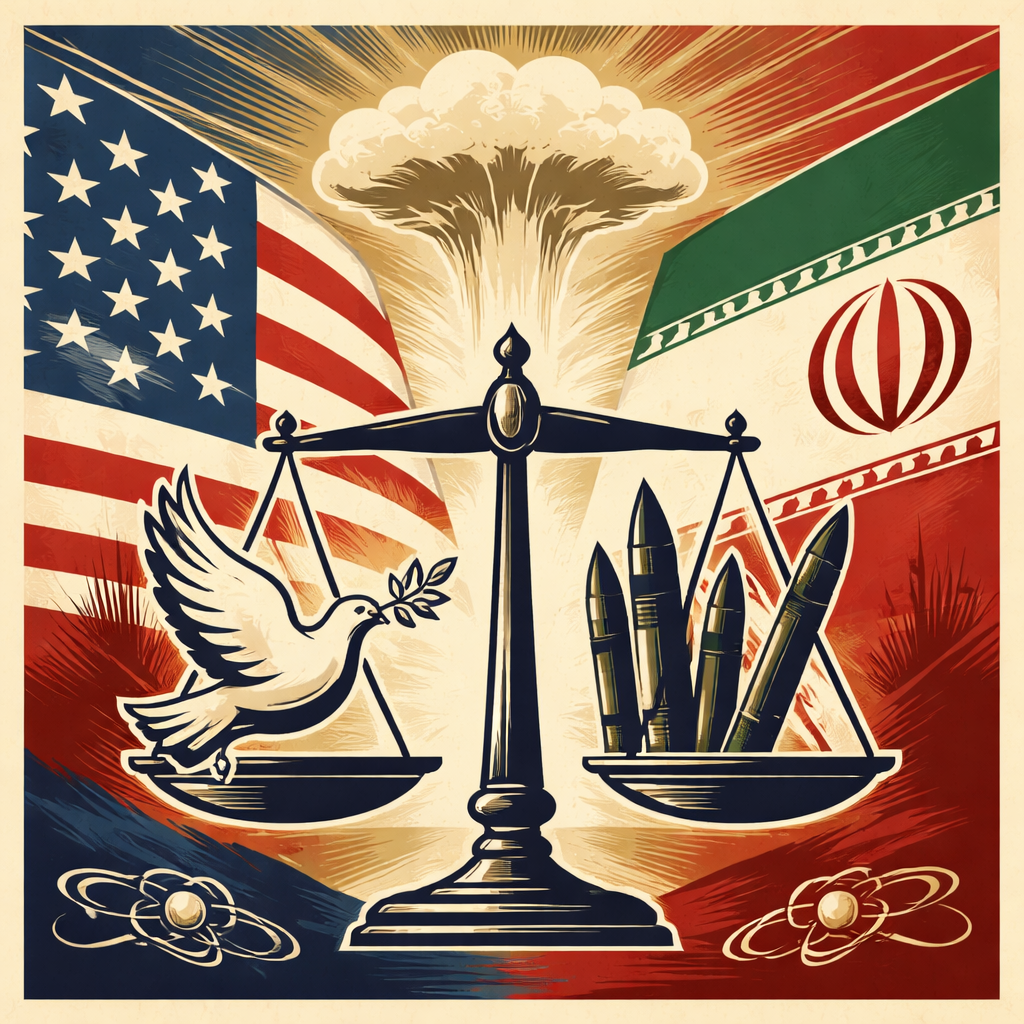
Is peace with Iran within reach—or are both sides simply maneuvering for leverage? In today’s episode of The Todd Huff Show, Todd breaks down the reported 15-point framework from President Trump designed to bring an end to escalating tensions with Iran. The proposal includes strict conditions: dismantling nuclear capabilities, ending proxy warfare, opening key trade routes, and submitting to full international inspections.
But Iran’s response tells a very different story. Its five-point counterproposal demands immediate sanctions relief, recognition of its nuclear ambitions, and zero limits on missile development—positions that directly contradict U.S. objectives.
Todd explains why this isn’t just a geopolitical negotiation, but a deeper ideological conflict with global implications. From nuclear deterrence to regional stability, the stakes couldn’t be higher. This episode cuts through media narratives to examine what’s realistic, what’s dangerous, and what could come next.
🎧 Listen to Today’s Episode
📰 Stack Links
Want to get Stack links and content delivered to your inbox each weekday?
Subscribe to The Inner Circle. It’s free.
📝 Transcript: Trump Iran Peace Framework and the Fight Over Nuclear Power
The Todd Huff Show – March 26 , 2026
Host: Todd Huff
Todd Huff: Well, are we going to see peace in Iran and in the Middle East? That is what we're going to talk about here today. Trump has released a 15 point plan. The Iranians have released a five point plan of their own. I want to talk about that today. It is relevant, it is timely. And you have tuned in to America's Home for Conservative, Not Bitter Talk. It's a pleasure. To be here today. My friends, if you haven't done so, I invite you to subscribe to the Inner Circle, where we delve even deeper than what we do on the program. Into the issues you get access to, the background information. Things that I don't have time to discuss on this program. All you have. To do to become a member of the inner circle which is free is text the word truth. T r u t h truth. Text that to 317-785-1030. Okay. So we're going to talk about Iran today. We're going to talk about this 15 point plan, this five point play in what's going on, the framework, the just a whole bunch of things. That lead up to the conflict. To how we resolve the conflict. And where we go from here. So that's what we're going to talk about today, my friends.
Todd Huff (Sponsor): But have you ever wished that you've had a full team to help manage your financial life? That sounds pretty good. To a lot of folks out there. That's the beauty of family office services at Full Suite Wealth. Their experienced advisors bring together everything from high level investment management, private equity, private credit options, strategies. All the way to complex legal needs, all customized for you. It's like having a family office just for you. My friends with people who know your story, they know your goals. They understand what you're trying to do and how to get there. So if you're serious about planning for the long haul, check them out. Fullsuitewealth.com that's the website again. Fullsuitewealth.com Build your legacy secure your future, okay?
Todd Huff: So let's talk about what is being reported. And what is being reported is that Donald Trump, the White House has released, well, has offered, according to reports, a 15 point plan or framework to the Islamic Republic of Iran. The Iranians have responded in kind with their own five point counter framework, if you will. Now, there's not an official document, at least that I've seen so far that's been released publicly, and so, of course, there's discussions in the media about how this is going to be framed. I'm going to try to present this, of course, I'm going to give you my opinions, but as straightforward and with as much information as I possibly can. So let's go through. Let's go through Trump's 15 point plan. By the way, I referenced this. I'm basing this primarily off of what I read in the New York Post, and that, again, is in the inner circle, which I mentioned earlier. You can get that and you can read it for yourself. You can Google and look for the New York Post version of this. But here we go. Here is the general outline of that 15 point plan or framework: 30 day ceasefire window. That basically means that there is a pause, a defined pause of 30 days where there won't be any fighting. It's not a permanent peace. It is a ceasefire to give the negotiators time to come to an agreement on the framework of this plan.
Todd Huff: Number two, Iran gives up its nuclear weapons capability. This doesn't mean that they slow down their dreams of having a nuclear weapon. This means that they completely remove the ability to produce a nuclear weapon. I'm going to pause here. We've talked about this. You know this. Iran absolutely cannot have a nuclear weapon. I know that there are still people out there, and candidly, probably not in this audience, there might be some, some that need this explained. But the vast majority of you, you just know this. Well, intuitively, I think this isn't intuitive. If you've got someone who is talking about systematically wiping another group of people off the face of the planet, they don't need the means by which to carry that out. They simply don't. Especially something as powerful as a nuclear weapon. They don't need that. That should not need to be explained. All countries having a nuclear weapon are not morally equivalent. It's simply not. And I know, I know, there's the hate America first crowd, as Russ used to call them, or the blame America first crowd, I think is how he typically referred to it.
Todd Huff: But there are people who think that it is morally equivalent for the United States and Iran to have nuclear weapons. That is a complete lie. That is burying not just our heads in the sand, our entire body in the sand, miles deep in the middle of the Sahara Desert. That's how deep we have to go to be obtuse enough to believe that it is not the same thing. Nuclear weapons are a deterrent, and they should not be wielded by people who want to use them as offensive weapons, especially people who believe, as do the ayatollahs, the supreme leader that the Iranians say has replaced the previous supreme leader. They believe that they have a divine mandate to kill the infidels, and to kill the Jewish people and to kill Christians, and to establish at least a regional caliphate, if not a worldwide caliphate, where they would usher in Islamic rule, Islamic law, not just amongst the Islamic community, but worldwide for everybody, or at least whatever region of the world they can control. They ultimately want to have a worldwide caliphate. Make no mistake about it. And they believe that they are commanded. This particular bunch, the Iranian leadership, believes that they are ordered by Allah to do these things, to use force when necessary, to eliminate people who don't believe, who won't convert.
Todd Huff: Now, that's this particular group or sect of Islam, and they are serious about it. And there's no one worse in their minds than the Jewish believer or the Christian. Now with the Christian, they have a lot of problems because Christians, because of the Trinity, Islamic followers have a hard time understanding that Christianity is still a monotheistic religion because of the concept of the Trinity, God in three persons. They say that that is monotheism, and so that creates tension and turmoil. And then, of course, with the Jewish people, that conflict goes back to the time of Abraham and Isaac, Abraham and Ishmael. We've gone through that part of the biblical narrative. If you don't know that story, it's in the book of Genesis. It's one of my favorite stories. When Abraham was called by God to take his one and only son Isaac up the mountain and to offer him as a sacrifice, of course God did not let him carry through with that. God was testing his faith to see if he would, of course, follow his voice, and he provided a ram.
Todd Huff: Now, a lot of people misunderstand that story, and this isn't the time or place to go through that, but God led ultimately by example. God did that very thing. In fact, biblically speaking, historically speaking, the place, Mount Moriah, where Abraham took Isaac up the mountain to sacrifice him—and he didn't have to, because God doesn't require that—in fact, the sacrifice of Isaac wouldn't have done anything. It's the sacrifice of Christ that meant something because he was innocent. He had our sins transferred, if you will, onto him, and he paid the price for those sins, and he imputed to us his righteousness. And that's why the Bible talks about the Christian being holy and righteous, not because we attain those things by our own efforts. Certainly we should try to do what we're commanded to do, but we fall short miserably if we're being honest, at least in many, many cases. But that's what happened. And God, at that same hill, that same area—it's now modern day Jerusalem, the site of the Temple, the Temple Mount, the site of the Alaska mosque—and again, it all converges there, right?
Todd Huff: The Alaska mosque is Islam. You've got the temple, the site of the Jewish temple, which is in the same place as the Alaska mosque. There's a gate, the eastern gate, I believe, that it's believed or understood that that's the gate Jesus will, when he returns to Earth, enter through that gate. The Muslims have basically walled that off, and I believe they even have a graveyard in front of that to deter his entry from that gate. But of course, good luck with that. Good luck with stopping the God of the universe. See, Muslims believe that it's Isaac—excuse me—that Abraham sacrificed Ishmael. I went through this before. I don't want to repeat myself, but I think obviously people will tune in and have joined us over the course of time and haven't heard that conversation. But this goes back to that period of time. Ishmael, of course, is in the lineage of the Islamic lineage, and Isaac is one of the fathers of the Jewish faith. And so there's tension, lots of tension in this region between Iran and its neighbors. It hates the United States, who it calls the Great Satan. It hates Israel, who it calls the Little Satan.
Todd Huff: And so it can't have a nuclear weapons capability. That should go without saying. So it gives up its current weapons capability today. That's number two. Number three, it commits to never building a nuclear weapon. So not only do you have to stop in Trump's 15 point plan as being reported, not only do you have to stop what you're currently doing with nuclear weapons, you have to permanently abandon this. Because again, you are, well, you've proven yourselves to be a maniacal regime. You've engaged in proxy wars where you fought using, and we'll get into this a little bit more, but you've fought using terrorist organizations. You funded them, you've given them weapons, you've been responsible for the deaths of U.S. military personnel in Iraq, in the region, and so even in this particular conflict. And so you cannot be trusted with nuclear weapons. It is not the same thing for Iran to have a nuclear weapon as it is for the United States.
Todd Huff: Ask yourself this, and we've posed this question before on the question or the issue of Israel versus Palestine. We've posed the question and said if Palestine, the Palestinians, had Israel's military capability, would there be a nation of Israel? And the answer is clearly and obviously no. Well, it's no outside of the hand of God Almighty. Now, that's a different story altogether. There's nothing that's going to prevent him from stopping whatever he chooses to stop. But of course, from a human perspective, if the Palestinians, of course being run by Hamas, had the weaponry of Israel, we of course know that they would use it likewise. Likewise, if Iran had the nuclear capabilities of Israel, then they would, of course, if not use it, threaten to use it very seriously and destabilize the region and the entire world very, very quickly. Number four, so not only is there the 30 day ceasefire window, not only are they calling, is Trump demanding that Iran gives up its nuclear weapons capability, commits to never building a nuclear weapon ever, the fourth point here is no uranium enrichment inside Iran.
Todd Huff: So domestically inside its borders, under this new plan, Iran would not be able to enrich uranium at all. That is a core step that's needed to build a nuclear weapon. Now, without going through the details and getting bogged down too much in the weeds here, Iran has pretended that it's trying to produce nuclear energy for the benefit of the people living in Iran, which is ironic because Iran never does anything for the benefit of the people living in Iran. The regime in Iran is one of totalitarian rule. It is a terrorist state. They fund terrorism. They terrorize their own citizens. They keep them from having their will, prevent them from exercising their rights, free speech. They shut down the Internet. They have harsh penalties for all sorts of things, including, by the way, for those on the left or those in the LGBTQIA+ community, the LGBT crowd, that can be punishable even up to death in the Islamic Republic of Iran. You cannot have—Trump says—you cannot have enrichment inside of the Republic of Iran.
Todd Huff: So the initial deal that we had with them, again, was predicated on the idea that they wanted to give nuclear energy to their people. Of course, we know that they abuse their people. They have no interest in that. But if you have nuclear facilities where you are pursuing quote, unquote nuclear energy, you are moving to the point of weapons grade enrichment. Now having nuclear power, I should say enrichment for power is not to weapons grade enrichment, but you're moving closer. And everyone realizes, everyone with a brain realizes that that is what Iran has always wanted to do, move closer to the point where they have this capability.
Todd Huff: This is an evil, evil regime built upon absolutely a type of government that is not going to work and that is antithetical to liberty and freedom. Number five here, Iran is to hand over its enriched uranium stockpile. So they've got a stash of this stuff. They're supposed to remove it and give it back to, I guess, the IAEA or the international community. That's one of the demands Trump makes. Number six, key nuclear facilities are to be completely and utterly dismantled. That would be facilities at Natanz, at Fordo, at Isfahan, taken completely apart. Not just monitored, not just we keep a close eye on them with satellites and every once in a while with people who are part of the inspecting community. No, absolutely dismantled, physically dismantled. Trump also says full international inspections. This is to be conducted by outside inspectors. Of course, they get broad unrestricted access to look around to make sure Iran is following the rules. Iran needs to abandon its strategy of using proxy armies, which I alluded to here off the top of the program. Stop using regional groups to, well, you could say project power, but to actually wage war in some cases, to engage in terrorism in some cases, none of that. Stop doing it. Stop fighting different countries. Stop inserting yourself into wars by using a third party, a proxy that, of course, we know that they are funding and providing weapons to.
Todd Huff: Iran also is to stop funding and arming those proxy groups. Again, many of these points are just connected. These groups, by the way, include Hezbollah, includes Hamas. Hamas is primarily in, well, Palestine now, or the area controlled by the Palestinians. Hezbollah, who is in—I think Hezbollah is in several places in the Middle East. I believe they're in Lebanon, Iran, other places. And the Houthis are primarily in Somalia, right, I think. But again, these are terrorist groups and they have groups in multiple places, but nonetheless, that's the groups that Iran is to stop funding and arming. The next point is that the Strait of Hormuz must remain open. This, of course, goes without saying as far as commerce is concerned, as far as being able to economically live your lives. And a lot of times this sort of stuff is poo-pooed by the intellectual types, but this is where the rubber meets the road, too. This is a legitimate problem. And for far too long, the intellectual ruling class has looked down its noses at the American people or other people around the world who are trying to survive and thrive and start businesses and take care of their families and send their kids to school or whatever they're going to do.
Todd Huff: And the Internet, well, the pointy-headed elites, the arrogant, the self-righteous, look down their nose and say this is just about the price of oil. Well, I mean, listen, I know today we've been spoiled with the standard of living that's unmatched throughout the history of the world when you look comparatively to world history. But the bottom line here is that when you impede people's abilities to live their lives to the point where, listen, there were times that if you took away supply lines, you could literally—what do you think sieges were, right? You would lay siege on a city, prevent anything from going in or coming out, and you could effectively starve the people, keep supplies from going in there. And you can say this is only oil, this is just something that we need for fun, I guess, but the truth is it makes living—it makes living and providing for your family healthy foods or lifestyles—it makes it possible or less possible, more or less possible, depending upon the prices of all these things. These things do matter. You can't just say, oh well, and throw our hands up in the air. Friends, I got to take a time out.
Todd Huff: But let me remind you, we've been partnered here with MyPillow on this program for a couple of years now, I think it's been three. They've got a wide variety of products—pillows, sheets, towels, slippers, a whole bunch of stuff that you may not even know that they have. And you can find by going to MyPillow.com. Use promo code Todd, you're going to get discounts on, I'm going to say virtually everything, but probably even everything. That'll save you there. MyPillow.com, promo code Todd. Check them out for me. My friends, back in just a minute. Welcome back, my friends. So moving right along here, we're talking here about Trump's 15 point plan to get peace between the United States and Iran. As I mentioned yesterday, if you haven't read Sun Tzu's The Art of War, I would encourage you to read it. I would encourage you to read it because we're in a war, and part of being in a war is to keep your opponent guessing. And so I do believe that Trump is interested in ending this war, but his focus is not just on ending the fighting. And that's what too many people have focused on—just that. Well, let's just stop it. Just make sure that you stop it. And I understand wanting that to stop. I don't want there to be war. I don't know really anyone who does. I'm sure that they exist, but most people don't want war. But we understand that there is a time when war is necessary. And if you engage in a war and you don't achieve the objective, and you just stop fighting because people are tired of the fighting, you don't accomplish anything. You have to get the objective. You have to reach the objective. Then you can talk about ending the war.
Todd Huff: So this tells me that Trump believes that our objectives have been reached, at least to the point where we can begin to talk about these things. But it also tells me that, as I mentioned yesterday, there's other stories out there about airborne troops being sent—U.S. airborne troops. I don't know if it's the 82nd or what, but I've seen that airborne troops are going to be going to the region. So again, if you read Sun Tzu's The Art of War, when you're weak, appear strong. When you're strong, appear weak. And talk about ending a war when you're planning an operation—I mean, it's about head fakes. It's about strategic advantages, and we have to keep that in mind. And I think both things can be true. We're trying to work towards an end here, an end of this war, while also fully recognizing that when I get to the Iranian counter framework that they say that they would insist upon in having an end to this war, you'll find that we're not really anywhere close to reaching, at least publicly. Who knows what's happening behind the scenes. That's kind of the point, right? People are trying to posture, and you don't always know what the truth is. Part of that is because we've got a lying and deceiving media. I get that. But even aside from that, this is about winning a war. This is about human lives. This is about the safety of the free world. The stakes are high here, right? This isn't just a disagreement over some random piece of land somewhere.
Todd Huff: This is an ideological disagreement that has fueled, well, actual war. And the Iranians have gotten dangerous enough to where we have to physically do something to stop them before they have the capability to cause massive, massive damage. I mean, we don't think they have the capability yet—or how close, we don't know how close they are. They may have used it by now if they had it. But you just think about that for a moment. They were firing missiles and using drone strikes in nations that didn't have anything to do with this. So that's reckless. That's not what we do when the United States engages in warfare here. We don't try to attack, just lob missiles indiscriminately into some other country that we want to put pressure on our enemy to stop. We go and fight the war anyway. So there's a bunch of stuff going on. Who knows what's going to happen? I'm not predicting the end of the war here, though it could be moving close as well. I mean, we're moving in that direction, but a lot of things can happen. So we've given some of the conditions. There's a few more that Trump has in his 15 point framework. I last mentioned the Strait of Hormuz remaining open, and the point there is the Islamic Republic of Iran cannot threaten or actually disrupt global shipping routes through that region, or really anywhere else for that matter. That's a condition here. Don't try to inflict harm economically on nations just because you want to be run by maniacal lunatics.
Todd Huff: So Trump also says the missile program in Iran has to be limited. They have to be limited regarding the range of their missiles, how many missiles they have. We talked a little bit about this. It was believed that Iran's range for ballistic missiles was about 1,200 miles or something. They fired a missile that they think had the range to reach Diego Garcia, which is a base of operations for the United States in the Indian Ocean. They fired two missiles—one malfunctioned, the other was shot down by missile defenses. And so, you know, they didn't succeed, but are they trying to send a message? We've got more capabilities than you think we do? I don't know. They seem like a wounded animal to me that's backed into a corner, and they're just trying to inflict some damage to get pressure on the United States and Israel to stop the war without having these conditions placed upon Iran.
Todd Huff: So not only does Trump say you have to limit the range and the number of missiles, he also says missiles should only be used for self defense. You can't be offensively using your missiles. You can't be obviously firing these missiles into other countries, even other folks who have no direct beef with you. Iran, what are you doing? I mean, this is crazy talk. They're mad men. That's another condition here. They're also to end hostile regional activity, which, of course, they've been hostile. That's the thing. The average person doesn't think Iran is a hostile force. I think now a lot of people see this, but there are still knuckleheads out there that see the United States as the hostile force. By the way, this is why we have bases in places around the world. It's not so that we can attack Japan or Europe or wherever we have these bases. It's so that we can respond quickly to the threat when it's over there before it reaches a point where it comes over here. And so Trump is saying this hostility in the region has to stop. Broader reduction of your destabilizing actions. Iran has to be dealt with. Compliance must come, Trump says, before things are normalized. Iran has to first meet conditions. And this is a big important thing because when I read you or share with you Iran's counter proposal, if you will, you're going to see that they want all the conditions lifted and then move forward.
Todd Huff: The United States is basically saying these things will be lifted as we begin to see the behavior that aligns with warranting the lifting of some of these things. So if you want to be treated normally, you're going to have to first show the rest of the world that you can put your big boy pants on and not be a petulant little lunatic child over there acting like mad men with missiles, trying to acquire nuclear weapons. And then, of course, the last point, which is a continuation of that point, is that full sanctions relief will come after compliance. Now I want to talk a little bit about what those sanctions are, just so you know, but we'll have to get to that after the break. I also want to talk about what Iran's five point counter responses to those 15 points. That, by the way, those are the full 15 points. And if you want to see the full list, get it delivered straight to your inbox. Just text the word truth to 317-785-1030. You'll get that along with other information that we don't have time to get to here in the program by signing up for the Inner Circle. It is absolutely free.
Todd Huff: Okay, so there you go. It's a good place to stop. My friends, if you're curious about kratom, if you're just trying to figure out who you can trust, consider checking out Christopher's Organic Botanicals, a family run company. They offer lab tested kratom, not the synthetic junk that's given kratom a bad name. Real kratom, my friends, is responsibly sourced and tested for purity. That's what Christopher's is all about. They work directly with the farmers in Indonesia to harvest this product. They follow the same traditions that have been trusted for generations. There's no gimmicks, there's no shortcuts, there's nothing like that, no funny business—just clean, honest kratom. Now, if you do your research and if you decide it's a product you want to try, and it makes sense for you, start with their kratom starter pack. It's a great place to begin. Coupon code Todd Huff saves you 10% on your first purchase. Christopher'sOrganicBotanicals.com. That's Christopher's Organic Botanicals.com. Truth. Tradition. Transparency.
Todd Huff: Welcome back, my friends. Third and final segment where we're going through Trump's framework for an end to the war in Iran. We're about to talk about Iran's counter proposal, if you will, to end the war. Talk a little bit about sanctions as well. But let's face it, there are a lot of companies out there that do not share your Christian values. The good news is that you do not have to invest in them. At 4:8 Financial, they specialize in biblically responsible investing. They'll help you screen out companies that go against your faith, they go against your values, and they'll help create a plan that's tailored to meet your goals. They do all of the heavy lifting, all of the work, all of the comparative analysis and so forth, so that you can focus on what really matters. So if you want to see to what degree or how your current investments align with your values, or dare I say against your values, my friends, head on over to 48Financial.com/Todd. That's 48Financial.com/Todd. Take their quick and easy assessment. 4:8 Financial, because your values matter, and my friends, so does your money.
Todd Huff: Okay, so I mentioned sanctions before. Well, let me do it this way. Let me give you Iran's five point response as reported. I'm just telling you what's being reported. This is all subject to change based upon the next news report or whatever happens here as we navigate these circumstances with Iran. But here's their five point response. They say sanctions need to be immediately removed. This is what happens at the beginning of the process. The Iranian regime says we're not going to phase these in. If you want to, United States of America, if you want to get peace with us, you're going to have to remove all the obstacles immediately. Of course, there's a problem with that because they've had sanctions. They're the ones that violate sanctions. They've done this with their nuclear weapons. They've done this with their proxy wars. They've done this through being a state sponsor of terrorism. On and on it goes. The second point that they have, though, is that they state that the United States must recognize that they, Iran, have a sovereign right to a nuclear program. No, as a matter of fact, you don't. You've called for the true annihilation of a nation. It is amazing to have to explain this to people who hate Israel with every fiber in their body because a good chunk of those folks hate God, who of course called the nation of Israel his people. That's the story of the Old Testament anyway.
Todd Huff: So that's what Iran says in their second point. Number three, no limits on missile capability. Iran says if we want to develop a missile that can hit the United States, that's our prerogative. That's what apparently they want us to sign on to. Number four, U.S. withdrawal from regional interference. So basically, Iran doesn't want the United States to be supportive of Israel. They want the United States out of the Middle East so they can run roughshod over the people of Israel. Number five here, security guarantees against regime change. So they're saying we want your promise here that you're not going to try to change the regime in the Islamic Republic of Iran. Now, they mentioned sanctions. I just want to briefly, I don't have a lot of time here, but I'll do my best to get through them. So right now there's oil export restrictions. There are limits as to who can buy Iranian oil. This reduces revenue. This leads to discounted sales. There are banking restrictions. Iranian banks are cut off or limited, so they have a hard time moving money globally. There's targets on their central bank, so core financial systems in the country have been restricted. These things hurt the country economically. There are frozen foreign assets. There's billions of dollars being held abroad that Iran has limited access to. There are restrictions on trade—limits on technology, infrastructure, industrial goods.
Todd Huff: There are shipping and insurance limits, so it's harder and more expensive for them to move oil and other products in the global market. There are other sanctions as well that would be considered a sort of secondary sanction so that other countries can be punished for doing business with Iran. And so Iran wants all this stuff, understandably, right? They're trying to get out of this mess, but they've created it. That's the problem. They've created it. They have proven time and time again that they can't be trusted, at least the current leadership. This is not, by the way, an implication of the people of Iran. In fact, this is a moment that I hope the people of Iran can seize to rise up and hopefully replace this absolutely despicable regime that they've been living under and replace it with something far better that's far more aligned with how God created us to live this side of heaven.
Todd Huff: But friends, that's all the time that I have today. Thank you so much for listening. We will talk with you again tomorrow. SDG.