
The Stack: Understanding Incentives, Tradeoffs, and Political Reality
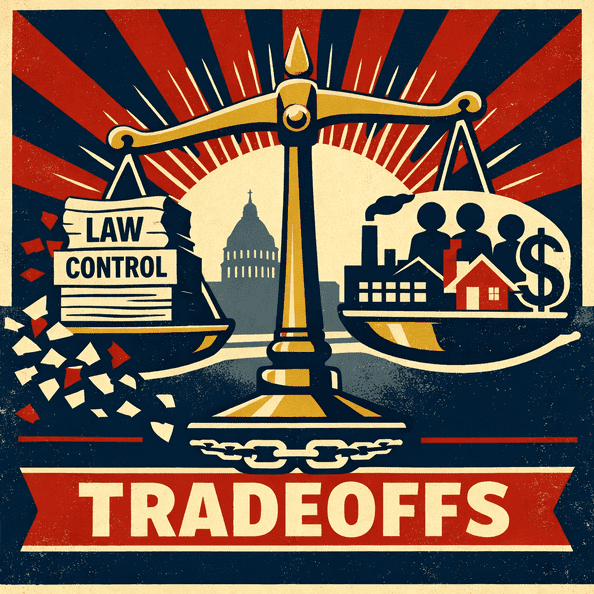
In today’s Toddcast, Todd explores one of the most overlooked drivers of political outcomes: incentives. Building on previous discussions about truth, power, and human nature, Todd explains how every policy decision—no matter how well-intentioned—creates ripple effects that shape behavior in unexpected ways. From rent control and price fixing to minimum wage laws, he illustrates how government intervention often leads to unintended consequences like shortages, reduced opportunity, or distorted markets.
Todd also dives into the motivations of politicians themselves, highlighting how reelection, public approval, and power influence decision-making. Drawing on the ideas of economist Thomas Sowell, he emphasizes that there are no perfect solutions—only tradeoffs. Understanding those tradeoffs, he argues, is essential for meaningful political discussion.
This episode challenges listeners to move beyond emotional reactions and surface-level debates, equipping them with a framework to think critically about policy, economics, and the real-world impact of government decisions.
🎧 Listen to Today’s Episode
📰 Stack Links
Want to get Stack links and content delivered to your inbox each weekday?
Subscribe to The Inner Circle. It’s free.
📝 Transcript: Understanding Incentives, Tradeoffs, and Political Reality
The Todd Huff Show – March 17 , 2026
Host: Todd Huff
Todd Huff: Well, that is right, my friends. You have ever so wisely tuned in to America's Home for Conservative not bitter talk. We have been doing a little bit of something different here normally, and if you've tuned in recently and just started listening. This is the same type of content. It's just that we are handling it a little bit differently. Over the past. What are we on now? This is day five. Day five of a Guess you could call it a five part series where we're talking about. Some fundamental. Fundamental concepts and ideas that. Help us understand or discuss or form opinions on political issues. I kind of started this about a week ago. Now, where. We said, everybody has an opinion, right? Everybody has an opinion about these things, political issues. But for many people, it's simply an issue of an emotion. Or it's simply an issue of opinion. If they like something that's blue. And there's a law that says everything that we buy and sell in America must be blue. People cheer for the policies, though. That's what this is all about. And so we're trying to give greater context as to some bigger ideas. These political opinions are downstream.
Todd Huff: We've said before. It's downstream from culture. It's downstream from worldview. It's downstream. From how we believe what we believe about truth, and we talked about truth. In our first episode in this series, we talked about power. We've talked about human nature. We've talked about incentives, and that's what I want to continue talking about here today. And then I want to move on to some other fundamentally important things. And again, we're trying to give people a prism, something to view politics through that gives some structure and some, I guess, framework about how to discuss these things, how to view them. Why they matter, how we were created to live this side of heaven, all those sorts of things. My friends. And this is again day number five. So you can go back and listen to the previous four. Todd, Cass, and you'll hear all of these. And, as always, the best thing to do. The best thing to do to get all the information, all of the additional articles and thoughts. And things that we discuss here, the links to things that are background information. You can subscribe to the Inner Circle. It's totally free.
Todd Huff: The inner circle. You can get that by texting the word truth, because, hey, that's what you're going to get in the inner circle. Truth. Text that keyword to 3177-8510-3031-7785, 1030. Text the word truth and you'll get signed up for the Inner Circle. So that's where we're headed today, my friends. It's my pleasure to be here. Thank you for. Thank you for joining us. Before I get started, let's face it, my friends, living with discomfort. Can be tough. And while prescription medications can help, they often come with a long list of side effects, not to mention the risk of dependency. And this is often overlooked. It's amazing. Just how blindly some people follow without thinking about some of these things. There's a lot of risk to some of this. That's why more people are exploring natural options.
Todd Huff (Sponsor): Like Kratom from Christopher's Organic Botanicals. It's a family run company. They do things the right way. They work directly with Indonesian farmers. And lab tests. Every batch. To make sure that it's clean. There's no synthetics, no chemicals, no surprises. Just honest, natural kratom that's been used for generations. Real Kratom is pure. And it's properly handled. The problems come from synthetic blends and contaminated garbage that's out there. Christopher's keeps it real, they keep it clean. They keep you informed. Start with their Kratom starter pack. After you do your research and decide that you want to give this a try, that's the place to start. Use code, Todd huff. You'll save 10%. On your first order. Christopher's Organic Botanicals. Com. That's Christopher's Organic Botanicals. Com. Truth, tradition, Transparency, my friends.
Todd Huff: All right, let's pick up where we left off. Yesterday. We were talking about incentives. We were talking about human nature. Talking about unintended consequences and every policy. Right, Every policy. Every time the government gets involved in something, every time that. I mean, candidly, every decision that we make. There are consequences. Seems to carry a bit of a negative tone to it. But if you make a decision. It's a thoughtful decision. And you use the right rationale and reasons to get there and so forth. It's thought through. There's good that can come with it, but there's also other results, consequences that come every time you make a decision. You're walking in one particular direction, by definition, you're walking away from something else, and that's good. That's good.
Todd Huff: That's why, by the way, this is just a tidbit of wisdom. That's why it's easier when you're younger and you're just starting off. And the world is at your proverbial fingertips, so to speak. Everything is kind of an option at some point. But once you begin to walk down a path, Which is good. That's how you become. Well, that's how you get to do what. You are created, hopefully what you're created to do, moving toward something that you want to master. I'm talking about professionally. But this can be in anything. This can be moving toward a relationship. By definition, if I move towards a spouse, Get engaged. I'm moving away from other people who? I might have had a relationship with. Right. And this is true for anything. And there are results. You're narrowing your options, and there's consequences.
Todd Huff: Right? You make this choice. You can't do that. And all this sort of thing. Every policy that we have in government as well. Produces effects, secondary effects, and sometimes those effects can be dominating. They can be the main thing that we get from a piece of legislation. I think of things like housing regulations. The intention of those were to protect the tenants. But what ends up happening is that there's a reduction in the housing supply. Nobody wants to. If there's rent control, for example. Or other onerous regulations on housing that becomes a cost or a burden. To the landlord. There's going to be fewer landlords or fewer properties that are put up for rent and so forth, because. Again. One action has another consequence, or it creates a series of cascading effects, so to speak. Prize controls again. You can step outside of housing. I talked about rent controls, but the same thing, right?
Todd Huff: Do you know, it's interesting to me. The reason that. We have company provided health insurance is because after World War II they fixed wages. They set wages. And so companies couldn't be competitive. To get the highest tier talent or to get employees. And so they became creative. They realized, I can't pay this person. Additionally, I've got a cap as to what I can pay them. So what I'm going to do instead. Is offer them a bunch of additional benefits. Offer them benefits like health insurance. And that's how it became a thing. For companies to provide it so much so, and it may be swinging back the other direction, the pendulum might be. But at some point in time, it was assumed that when you got a job, you were going to get benefits. But anytime the government steps in to fix prices. It creates shortages.
Todd Huff: I mean, look at what happened. In places like Venezuela. Right. I think of some of the comments. Any communist country, for example. Remember the bread lines in the Soviet Union. I mean, this goes on and on. Look at what's happening in Cuba, even right now. So the intention, or the stated intention, is to make something affordable, but what you end up doing is making less of it. Making less of it because again, If you try to set the price on something, it's viewed as not worth it to the entrepreneur. Profit is not a bad thing. What you need is profit in an economy where there's competition so that companies have to have a pressure to keep their price down. So that they can then decide what's can we sell it at to turn a profit. To pay our expenses. To pay our investors and all that sort of thing.
Todd Huff: Versus just let's, let's chart as much as we want because there's no competitive forces out there. But these are the sorts of things that, again, it's been said before, the road to hell is paved with good intentions, and there can be good intentions to protect tenants. In the case of fixing housing prices or getting people locked into a certain rate that they're going to pay for a prolonged period of time or potentially forever. Same thing is true when they try to control the government tries to control the cost, the prices of items in the marketplace. It doesn't work. Consequence for those things. I'll throw another one in here. That's. I'm in the minority, I think, on this. But the debate on minimum wages. The intent is to increase the income of people who are working.
Todd Huff: And there's this starting premise that says it's the job of the employer. To make sure that they pay someone a quote, unquote, living wage, which, again, you talk about something that's very subjective. But in my world, in my world, and I think the world that's firmly rooted in reality. Who determines that are the employer and the employee and what you end up doing. If you say you can only pay someone this amount or more for them to work as an employee, what you end up doing is you eliminate jobs. You eliminate entry level jobs, jobs that people may be looking to fill, not because they're looking to work full time. Maybe they just need to make ends meet. Maybe this is not something that's a career choice. Maybe this is something that exists to help them bring in some extra income.
Todd Huff: Over the period of time here as they get back on their feet or pay off medical bills or whatever it is. But when you increase the minimum wage, You cut out these entry level jobs again. You see this? The places that did the minimum wage raise the minimum wage to very high numbers. It's killed. For example, the restaurant. Industry. It's killed it because it's hard to find, it's hard to pay people who would have had part time jobs or whatever. The minimum wage. And so there's impacts. There are effects that are caused by all of these things. By the way, may I point out, too, it's often said that companies, companies will pay. If there wasn't minimum wage laws, they would basically pay their employees next to nothing.
Todd Huff: But see, again, that's not something that bears out in reality, because my friends, the vast majority of people, I think it's well over 90%. Are getting paid more than the minimum wage. And you have to ask yourself the question, why? Why are they being paid more than the minimum wage? It's because that's what the marketplace has determined the value for their role to be when they are being hired by a company, and so it becomes competitive. Becomes competitive. Companies want to get the best talent. So that they can produce the best product or have the best service or whatever. And that's how they attract top level talent, that's how they do that. It should come as no surprise to anyone listening to my voice. That employees try to get as much money as possible from the company that they work with, and the employer tries to pay the least amount possible. To the people that work for the company.
Todd Huff: And of course, small business people are a little bit different. It's interesting. I've been in small business, not just myself owning one, but been employed. By small businesses. And I've watched my friends, some of these people. Do everything they can to keep employees. Even putting themselves in difficult circumstances and so forth. It happens a lot. It's not always as clear. It's not always black and white as people want you to think. But in general, of course, the employee wants to get as much as possible. The employer. Wants to pay as little as possible in general. But there's consequences everywhere. There's realities and there's trade offs. And there's trade offs and incentives with politicians as well. My friends, there are incentives in politics. We all know this.
Todd Huff: We all know this, but I don't know how much some people really stop to think about it. Just think about some of the incentives that are out there for politicians getting reelected, getting adored and fawned over in the media. They've got to raise funds for campaigns. They've got to see the Republic approval numbers. Increase. I mean, they're people, too, right? Again, go back to what we talked about with human nature. We have a nature. We like to be viewed positively by other people. We like to have as much money as we can. And these politicians, again, are sometimes tempted to do things, and some shady things even. Where there's some money that may be diverted to them. It can't always be a check because that can be traced, but there's some things. There's some business dealings.
Todd Huff: Again, I don't want to go down a path here too far, but I'm reminded about President bribery and hunter biden. And all that sort of stuff. Allegedly. But it didn't just happen. Allegedly. There it's happened. There's a lot of people that get caught up in this. It's not complicated. I mean. This is right there for everybody who wants to see it. Politics, I should say. Politicians are rewarded. For promising benefits to their constituents. They're rarely rewarded, my friends, for making the tough decision, doing something that makes the most sense when it's not popular, and then going out and trying to explain that. To the voting base. That's not something that typically happens. And so there are incentives and rewards and consequences for politicians as well.
Todd Huff: Some of this is a good thing. Right. We want to hold them accountable for the votes that they place, the amount of debt that they put us in, for the wars that they get us in or whatever else. Right. The amount of open borders that we have in this country. The threats that they don't stop. That are directly impacting or threatening the American people. On and on down the line we go, my friends. It's good to hold them accountable. But when the people who elect politicians, the electorate, when they get together and they realize, listen, folks. If we just get. A majority of us to go along with this. We can raid the coffers of the upper middle class and the middle class and we can redistribute the wealth.
Todd Huff: And there ain't nothing anybody can do about it. That's where this gets really scary. And we've been there, my friends. There are people. Once upon a time, it was considered a bad thing to be a communist. Now there are people out there. Who are proud to be a communist. And so it is a much different world. Thomas Soule. Thomas Soule, who's a brilliant economist, thinker. He's written a lot of great. And profound. He talks about economics, right? He's talked about some principles in economics. And he points out that there are no perfect solutions. There are no perfect solution. This goes back. This goes back to our nature. When I talked about when I talked about human nature, when I talked about our sinful nature and talked about, hey.
Todd Huff: We are a fallen people. We are not perfect. And there are going to be no perfect solutions. It's just not going to work that way. And as Thomas Sowell points out, there's only trade offs. We have to balance the trade offs. There's going to be a negative impact here if we do X, but the positive is Y, and that is how it's going to work, and it takes people with a clear vision and understanding. And an ability to communicate that clearly. To the American people because the American people, oftentimes we live in a microwave society. We don't want to wait more than 30 seconds. For whatever we threw in the microwave to be ready to eat.
Todd Huff: And so that's how a lot of Americans live. And I think to some degree, the majority of us have been impacted by that. We don't like to wait for much of anything. If the wifi goes down, we're livid. If there's a two minute commercial break during a television program, we don't like it. And I understand that we're busy people. In fact, I would contend we're probably too busy. But the bottom line here. Is that it's hard to communicate these deeper truths. To people. Who don't care. I talked about king hezekiah. He was warned of some destruction coming to Israel. And when he found that it was not going to happen in his lifetime, he said, well, it's basically not my problem. And that's how a lot of Americans live. That's why we get away with doing, or politicians get away with doing, some remarkably inexcusable or dangerous things. Kicking the can. Down the road time and time. And time again.
Todd Huff: Soul's point is that every policy, because of these trade offs, produces winners and losers. The stated purpose should not be to do that, but anytime you're making decisions, And you have power in this fallen world. When you make decisions, there will be people who benefit, people who are hurt by that. It's just the way that the cookie crumbles, as we say. And the cost, of course, are sometimes hidden. Sometimes, because we can't possibly foresee something as complicated as what a piece of legislation has created. As is the case with Obamacare, although you could certainly see the writing on the wall, as well as to where it was taking us, the aca, if you prefer the official name, Affordable Care, the Affordable Care act. Anyway. But sometimes it's hidden deliberately. Sometimes it's hidden because society is sophisticated.
Todd Huff: And when people, when a policy hurts a person, they change their behavior. Right. And so it's very fluid in that sense. So I glance at the clock here. I'm about to take a break. My friends will do that. In just a moment. But, friends, your investments are like seeds that you plant. They grow, they multiply. But are they burying the kind of fruit that you want? At 48 Financial. They believe your money. Should reflect your values. They specialize in wealth management and biblically responsible investing. Screening out companies that don't align with your faith. It's all part of their purpose centered financial planning helping you live a life of meaning and purpose. If you want to see if your investments align with your values or to what degree they do.
Todd Huff (Sponsor): All you have to do is take a quick and easy assessment. By heading over to https://48financial.com/todd. Again. That's 48Financial.com Todd. 48Financial. They're here to worry about your money so you don't have to. I've got to take a break, my friends. Quick timeout. Back in just a minute.
Todd Huff: All right, my friends, welcome back. We're going through some, what I consider some very fundamentally important concepts and ideas so that we can give people a framework. A framework within which to discuss politics, to discuss the issues of the day. That are beyond what it is typically in conversations. I hate Trump. Or the Democrats or this. The Republicans are this. I'm trying to give some context here because it's something that's greatly, greatly missing. From political discourse today. Democrats hate everything Trump does. Republicans hate. Everything's Democrat. Everything Democrats do. And listen, I understand too. We've gone. The Democrat Party has moved very far to the left.
Todd Huff: So that's created that's created a much wider chasm politically. Republicans or conservatives didn't really move. The Democrat Party moved to the left. And that's created this large. Well, this chasm that we have in this country today. And we'd like to see that. There's a part of us that would like to see that. Rift healed without, by the way. Without. Compromising our principles. And so, anyway, we're talking about this, my friends. Sorry. Here. Hit the wrong. What did I do? Just want to just to give people some, what I think is some much needed context to conversations that are had today. So that's what we're doing. And I appreciate you hanging around for So I have screwed something up here.
Todd Huff: Trying to change the font colors. There we go. There we go. Okay. So we're going to pick up where we left off here. We're talking here about. The the trade offs. There's always winners and losers, and then. Then the marketplace responds. I mean, people are not static. They're dynamic. If something. If something, a new policy or a new law hurts them, they will change their behavior. I mean, people move from states today. From states that tax them too much. States that. Threaten their liberties too much or whatever. People change when it's time to when it's time to make donations. Tax law certainly motivates people to make certain decisions. That maybe they wouldn't make. Otherwise. You go on down the line.
Todd Huff: My friends. The speed limit, or I should say the. The penalty for speeding in a particular area of the country. Might cause you to not speed when you want to speed, it's down on down the line. This is just human nature. And serious policy thinking requires that we examine, think about, discuss these trade offs, because that's exactly what happens. And people, the citizens of this country. We have to ask deeper questions now. I know I'm preaching to the choir. I know that. I know that you're not the ones who need to hear this message. You follow this stuff every day. On a regular basis. Some of you have followed this even longer than I have. Understand these things quite well. Discuss these things with friends and colleagues and everything else. Some are. Some have been doing it a little while but still have room to grow. And then, of course, some folks are brand new to politics who listen to this show.
Todd Huff: And so we're talking to everybody here. But we must ask deeper questions. We shouldn't just get into the superficiality argument, which this is a huge problem in our politics today. It's the superficiality. It's the discussing the discussion of issues from a superficial lens. The left has. The left has mastered this because they know if they keep people dumb. And talking about things on a surface level. They're going to be. They, the left, are going to be more successful. In furthering their morally bankrupt and absolutely absurd political philosophy. That's what's happened. So we have to ask deeper questions. In order to ask deeper questions, we have to be better thinkers. We have to think about things like what incentives does this, a particular piece of legislation, create?
Todd Huff: Because it's going to impact something, it's going to incentivize some things, de. Incentivize other things. What behavior will the incentives. Or the lack thereof create, what will it encourage? What will the human response be? Again, based upon what we know about our human nature, what unintended consequences might follow? It's just amazing to me how people don't think about this. And a lot of people think about these things in their average. In their everyday life. Some people don't think about the consequences ever, which is bizarre to me. I remember my mom told me. I don't know if this is good or bad. I don't know. But I guess first grader. I know I was in elementary school. She told me. Well, I would come home from school and I would say, billy or whatever, he's not able to take his recess, or he's having to stand against the wall for the first 10 minutes.
Todd Huff: Because he didn't get his homework assignment turned in. I'm like, what's wrong with Billy? How many times does this have to happen to Billy? Before he turns in his homework assignment, before he realizes when he gets off the bus or whatever happens in the afternoon. You know what? I don't want to be standing on the wall at recess. I'm going to spend the 10 minutes or whatever it is to do my homework assignment and take it in and so I don't have to do that. And so some people are like that. But for the most part, we think about how our life decisions impact us. Or many people do. But for some reason, I don't know if people. I sometimes think that people don't think that they're smart enough or that politics doesn't concern them. I don't see it that way at all.
Todd Huff: I think everybody. I mean, I think you should be educated. On the topic, but everybody has should have an opinion. Or try to form an opinion, an educated opinion on the issues. And these things are not that hard to follow sometimes as sophisticated and complicated. And that's where following it like you do, or listen to a program like this. Is probably helpful. I know that Rush helped guide me through a lot of stuff. To help explain what was happening. But there are unintended consequences in everything that happens, especially when it's something as big as a piece of legislation. And just when you create what you think should happen, the people who are impacted by that legislation negatively are going to respond and maybe change the game dramatically.
Todd Huff: And the left never learns this. The left just assumes that if you raise taxes on a particular activity or product, that people are just going to keep buying it. At the same rate or continuing to do the same activity as though nothing had changed. But that, my friends, that just doesn't match with reality. So that's what I want to talk about here. That's what we wanted to talk about with incentives. And just. How our behavior behaviors as the politicians, but also humans, right? How our behaviors impact. All sorts of things, right? How one particular decision can impact another and how humans have a nature and our nature is self preservation, which is fine to a point. It's not fine when you're only considering yourself at the cost of everyone else. But obviously thinking about yourself, that is a good thing. Self interest is a good thing. Without crossing. That threshold into pure selfishness.
Todd Huff: And so that's, my friends, what I want to say about this. So I didn't get everything in here. Well, I shouldn't say that. I'm at an awkward point because I want to start a new topic here. I guess, episode here, but we're at the end of this one. So during the break here, I'm going to think about how I want to tackle this, but before I get to the break, Friends, you know what gives you real leverage. With your insurance company. It's not a receipt. It's not your memory. It's something called proof. That's where claim haven comes in. They create a before file. And that before file includes professional photo documentation. And a detailed condition report of your property, completed before anything bad happens. So when that storm hits, and we've had storms go through here recently. Fire. I saw fire in an adjacent town. Today when fire hits, storms hit accidental strikes.
Todd Huff (Sponsor): You're not scrambling to remember all the things that you had. You're ready. There's no debates, there's no delays. Just the facts. Claim Haven gives you the confidence to defend what's yours. Your home, your memories. Your family's future. And let me tell you, the kind of piece of mind that you get from that is incredibly valuable. It's a smart move that pays off when you need it most. Get started now at Claimhaven Club. That's Claimhaven Club, my friends. Quick time out for me. Listen here to conservative, not better talk. I'm your host, Todd Huff. Back in just a minute.
Todd Huff: Welcome back, my friends. Ever notice how some families seem to have a plan that lasts for generations? That is not by accident. Full suite wealth works with people who want their wealth to make a difference. For years to come. Their team brings together high level investment strategies like private equity, private credit option strategies. All that, coupled with expert legal advice and guidance, it's about making sure your vision becomes a reality for the people you love today and in the future. If you're looking to do more than just manage your money, if you want to leave a mark and build something lasting, Take a look at full suite wealth. Full suite. Wealth.com is the website.
Todd Huff (Sponsor): Jason and his team will take great care of you. FullSweetWealth.com Build your legacy. Secure your future.
Todd Huff: You know, friends, I've thought about this during the break, how I want to tackle this, because I don't want to start. The next lesson, I guess the next the next podcast or Toddcast here in this series, a podcast that we're doing. What I want to do is just take a moment, just take a moment to reflect on what we have. And I do this from time to time on this program, my friends. I don't think the average American realizes what we have in this country. I don't think the average American realizes just how fortunate and blessed we are to be Americans. To be Americans living in the 21st century. You know, people badmouth this country. And again, this country is not perfect, but my, oh, my, this country was instrumental in radically transforming the quality of life.
Todd Huff: And the amount of liberty the average person had on planet Earth. In fact, if you look at the average. The average life over the course of the history of humanity, You'll find that there was a lot of suffering, a lot of tyranny, a lot of poverty. A lot of people not having the opportunities and the choices that we have, the quality of life. The life expectancy, all those things. All those things have improved dramatically, in part because of what the United States of America. Decide to embrace when our founding fathers formed this great nation. And I. I think I was taught now. I went to a small town school, I went to public school, but I went to a small town school where the community still appreciated this nation is founded.
Todd Huff: I think I've shared on here before. I remember as a little kid. I don't know. Second grade. I remember taking turns going out to the flagpole and we would raise the flag in the morning and we would bring the flag down in the afternoon. We were taught how to properly handle it and fold it and all that sort of stuff. Take care of it, respect it. We were taught that America was a place that was unique and good. On planet earth. We. We loved it. I mean. I. I don't know that anybody. I think maybe I had. I, I, I, I don't know. I just always loved it extraordinarily much. And it's not everybody's thing. Some people didn't care. They had other interests and all that.
Todd Huff: But I've always been just thankful for this. This is not a guarantee. We are. We are the exception. We have the opportunity to live as free people, we have the obligation to pass this on. And when politics becomes what it is today, a bunch of emotions, a bunch of, you know, just. We're comparing the United States to some mythical idea of what's better. Because, friends, this is. This is this side of heaven. The American system is the best way to live. It's the best one that we know of anyway. And it makes a lot of sense because it reflects the way that we were created to live. As I see it. From our creator, Yahweh.
Todd Huff: This is how. He created us to be free. He created us to live. Accountable. First to him not to again. Government was there. He ordained government, but. The first. The first bit of accountability, and the ultimate bit of accountability lies between the individual person and almighty God himself. And so I'm grateful and I think it's necessary. I wish we could return, and maybe we are. Friends, I know that Generation Z, Gen Z, as they say, is having a bit of a. An awakening. To where? You know, I've said before, we've got. You know, our kids, we have two teenagers and we have a 12. A 12 year old.
Todd Huff: But I've told them that, you know, Might be the generation that saves this country. Because I think they've seen. Utter nonsense. Right? They've seen it. For the kids that have gone to public school, they've seen it. Amplified in a dramatic way. They've looked and they've seen. Adults that are telling boys they can be girls and girls they can. All this stupid, ridiculous stuff. And again. My heart goes out to people who have. Confusion about those things or just struggles, I. Listen, I'm not. I'm here to bash that. But that's not normal. That is not. That is not good. That's not the way that we were created to live.
Todd Huff: And they've seen the nonsense, they've seen the promises of perfection, they've seen the anger and the rage from the people that they that constantly talk about how much they love people, but yet these leftists are full of rage and vitriol. And I think that maybe Gen Z is going to be the generation to write this ship. I hope so. Who knows, right? I mean, a lot of things can change. But that's why I want to talk about this. These issues. Not again. We talk about politics on a regular basis. We'll continue to do that. But I want to get through this series. And we'll continue, my friends, in the days to come. I've got to run SDG.