The Stack: When Government Forgets Its Role
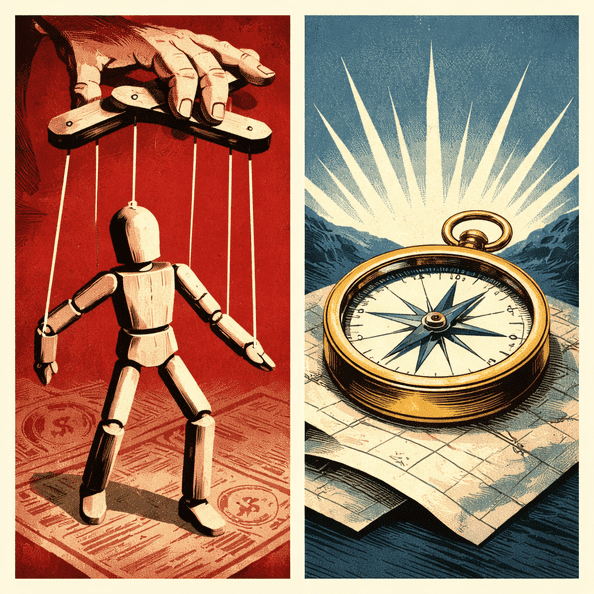
In today’s episode, Todd Huff continues building a framework for understanding politics by focusing on a core truth: freedom requires choice. When government shifts from protecting rights to controlling outcomes, it distorts incentives, markets, and even morality itself. Todd walks through real-world examples—from energy policy to corporate bailouts—to show how government interference creates artificial winners and losers while encouraging risky behavior without consequences.
He also tackles a deeper cultural issue: the misunderstanding of charity. True generosity, Todd argues, must be voluntary. When government forcibly redistributes wealth, it replaces compassion with coercion—removing the very virtue it claims to promote. This confusion, he explains, lies at the heart of many modern political debates.
Ultimately, this episode challenges listeners to rethink how they view policy, power, and personal responsibility. Freedom isn’t about guaranteeing equal outcomes—it’s about preserving the ability to choose, succeed, fail, and grow.
🎧 Listen to Today’s Episode
📰 Stack Links
Want to get Stack links and content delivered to your inbox each weekday?
Subscribe to The Inner Circle. It’s free.
📝 Transcript: When Government Forgets Its Role
The Todd Huff Show – March 19 , 2026
Host: Todd Huff
Todd Huff: Day number...is this day seven? I can't believethis. Day number seven. We're going through what I consider to be, and I hope you've enjoyed this. You can share with me. By the way, you can text that number that you hear me... Reference if you want to sign up for the inner circle, which is free by texting truth. You can also text your thoughts and questions and feedback. It's the quickest and easiest way to get to me besides responding to emails from the inner circle. But that number is 317-785-1030. I wouldn't mind to hear what your thoughts are about this. We're not talking about the issues. I'm not deliberately avoiding them. I've just I think that these things that we're talking about are necessary for a larger, more important conversation. You know, people have opinions, as I've said on this program multiple times about politics. And their opinions are rooted mostly in feelings. Or they've become a fan of one party, like one becomes a fan of the Boston Red Sox or the New York Yankees, and they just want their side to win, not realizing or not caring or not putting the pieces together or whatever. That we're all we, the American people, the taxpayer, the voter is the one who is. Ultimately the winner, the loser, and we've been losing for a long time because because Americans don't seem to understand. Theleast not enough of us. I know most of you do. But too many people don't understand what we're up against, why these things matter, what makes America special. That's what we've been talking about. I want to give people a framework through which theycan talk about politics and apply to issues as they come up. And that's what we're doing here. We've done this. This is now day number seven. And I've enjoyed every step of the way.
Todd Huff (Sponsor): Friends, let's face it, every dollar we spend is a vote for the kind of America,that we want to live in. That's why we launched Freedom Marketplace. It's a free directory of businesses that align with your conservative values. These businesses have made a promise,no support for leftist candidates or causes. And if they break that promise, my friends, they are . Booted out of the directory. Take this. We take this seriously. So if you're tired of funding the woke agenda,visit FreedomMarketplace.net. It is free. Yes, you can set up an account and it's free to do that as well. It's totally free to you. You don't have to do anything. You can just look at the people there. But you can do there's some things you can do through the program,through the platform if you log in, but you don't need to do that. You can, but you don't need to. There's no cost to you. It's free to do. And my friends supporting conservative businesses, dare I say,is also, I think, the right thing to do. So check it out. Freedommarketplace.net. That's freedommarketplace.net. Liberty and business. For all.
Todd Huff: Yesterday, we kind of stopped,when we get we were talking about the role of government, what it's supposed to do, what it's not supposed to do. Found a good stopping point. I actually had to,it wasn't, I was at the end of the program and I decided, decided to not start this next,part of the discussion, I guess, until today, because I wanted to have enough runway,to get into this, this conversation, but. Politics has become,politics has become, it's a lot of things, but I think one of the things it's become, at least,the optics of it, is that it's a battle over,resources. And this, this matters because see, in a free market society, a free market economy, we are a,to produce more. The less government is involved and interfering in commerce,the more that is produced, the less expensive it is to deliver that product, that service to the American people or even elsewhere around the world. But when government gets involved and when government starts stepping outside of its bounds, then you begin to see that the resources begin to be affected. I mean, there are numerous examples of this. We talked aboutwell, let me give maybe the most obvious answer or one of the most obvious answers is the issue when it comes to oil. We have fought in this country for a long time to get,offshore drilling, to get new permits for drilling. And exploration and that sort of stuff. And it has been made difficult, expensive, and dare I say, nearly impossible during certain regimes and administrations here. And so when you don't have access to,well, to pull the oil out of the earth under our feet or off our shorelines, then you see government directly impacting, interfering with resources. And once government comescontrols the resources, which as they do in large economies or excuse me, in socialistic or communistic countries, take a look at Venezuela, for example, or just even in the case of what we have here, which sometimes becomes crony capitalism. You see government playing in the arena of commerce, not just regulating,not just regulating what truly needs to be regulated, not just enforcing contracts,not just protecting consumers from being lied to and defrauded by corporations or anything else. It becomes something else. They begin to,dip their toe in the metaphorical pool here. Politicians do. The government does. Big business does. And they collude and all sorts of messy things happen. And it becomes a competition to say, we want to be in charge of making the rules so that we can deliver the type of energy. If people can't get oil, just as an example, if it's difficult to explore, if it's difficult and expensive to refine or deliver,or anything else, then what happens is other technologies are forced on the American people. Which again, listen, I want to be clear. I don't personally care. I don't care. I have friends or family who have Teslas, electric vehicles. I'm not against it. What I'm against is subsidizing all of these things. You know, you stop oil from being explored for or being extracted from the ground orfind or transported or whatever, shut down pipelines,and then it drives the cost of oil and gasoline artificially up. And then you start to subsidize competing industries because the government's trying and wants people to move from gas powered vehicles to electric. If you wanna make that choice, I have literally zero problem with that. It doesn't impact me at all. I know some people in here listening to this program,may have some very strong feelings one way or the other about the vehicles. I, I don't. Have what you want. We pull a large camper.
Todd Huff: And that camper requires a large truck with a lot of power. It can't just be charged at a 110 or 220, whatever outlet or power source. There has to be something more to it. And so we all make individual choices. But this is what government does. And then it becomes a competition. We want to win an election so that we can have our group and what we want to see happen in the world forced upon society. And that is not the role of government groups become competitive They compete for subsidies. They compete for access to programs, for tax advantages to certain protections. Right. Back in 2008, when GM was too big to fail. And we've had this story repeat throughout American history on and on and on again. And what you end up doing when you bail out industries, I brought up that example, but when you bail out entire industries, what you end up doing is you tell the people who run these businesses, these ultra large, critically important or deemed critically important businesses, you tell them, look, there's no downside. Risk as much as you want, because there's a lot of upside if you hit some home runs on your risks. But if there's no downside, you actually again, incentives. You end up encouraging people to take dramatic risks because you take away the downside when they know the government is going to foot the bill.
Todd Huff: And so there you go. When government starts redistributing wealth, this is again picking up from yesterday a little bit. And when it becomes managing resources and forcing certain alternatives into the marketplace and trying to hamper another one in the case of electric vehicles or gas powered or wind energy or solar or whatever, when you begin to do this, you start redistributing wealth artificially to certain solutions, not really allowing it to cost what it truly costs, not making it come to market like everything else. And you begin to penalize. Think about this. You're penalizing another type of your limiting what their companies are able And it's not good. It becomes a fight. Politics becomes then a fight over who gets the money, who manages the resources, who then can get the levers of power to basically pay back the people that are on their side Now, government, I've said this before, and if you've ever watched if you've ever watched John Stossel, John Stossel does a great job. I like I like some of the things I see a lot of the things I've seen from John Stossel. And he said and he didn't come up with this idea, but he repeatedly has said this government is force.
Todd Huff: You've heard me say this as well. Government is ultimately force. My friends, government steps in when your decision making abilities, if you want to look at it that way, your framework for making a decision ends and no longer do you have an option, for example, to pay taxes. Right. So that's the end of that. You could But if you think you're going to use your individual choice, to not pay taxes, you're going to pay a consequence. Government is going to force you to do that or you're going to pay you're going to pay severely through legal consequences and so forth. And I'm not listen, I'm not advocating that you do that. In fact, I'm telling you not to do that. I'm simply illustrating that government is force. There's no more there's no more need for willing mutual cooperation between the parties. The party of government has to be big enough and strong enough to be able to force the American people, those who decide to cross a certain line or a certain law is or regulation or whatever to pay the consequences. A big difference, my friends. There's a huge difference between voluntary cooperation and government force. There's a huge difference between voluntary cooperation and government force.
Todd Huff: There's a huge difference between voluntary cooperation and government force. There's a huge difference between voluntary cooperation and government force. So,One of the things that,irks me, and I hear people do, I see people, you've seen them do this. They'll say things like,Jesus was a socialist, right? Because Jesuswants to help people. And they create a straw man. They create a straw man that says,socialists or people who want to use the government to help people are good. They're following the teachings of Jesus. And the people who are capitalists,and who are in favor of people keeping their own,wealth and resources, they're evil because they are causing people to be selfish and not contribute to the good of others. Friends,it is not charitable. Hear me say this. It is not charitable to spend someone else's money. It's not charitable to say government is going to forcibly take from one person or group of people, type of person at a certain income level, a certain business, whatever, and then forcibly take it from their fingers, what belongs to them, and then give it tosomeone else. Not charity is good.
Todd Huff: And by the way, I want to talk a moment. I wasn't necessarily planning on this, but I want to talk a moment. About the,well, people bringing Jesus into this. Jesus, they say, is a socialist. Jesus never once said to elect a government that's going to come in by the force of law to take what's yours and give it to somebody else or to take what's your neighbor's. That's not what he said. In fact, Jesus spoke to the individual. Jesus spoke,to the individual. And he told us as people, as his followers, as his children,he told us how to behave. He wants us,to choose to be charitable. Again, it's not charitable to force, forcibly take something from, I can't believe I'm having to say this. Forcibly take something from someone else and give it to someone. That's just not the way that it works. It's definitely not charitable. To vote for someone to take something, you know, to elect politicians who are going to enable the government force to take what belongs to somebody else and give it to me, to give it to yourself. That's the epitome of absolute selfishness.
Todd Huff: Charity is good. Generosity is good. But you can only be generous and charitable with what is under your particular ownership. You cannot be charitable with someone else's time, talents, or treasures. You can't. That's not what it is. It's not what it is at all. It's what you give. It's what I give. And it has to be done voluntarily. Government coercion is not. Compassion. There's a big difference. Voluntary compassion, government coercion. That is not the same thing. Not to mention, my friends, not to mention we're talking here about what the government should not do, but often finds itself doing. Because again, people demand it. They demand it because they don't understand it. They don't care about the role of government. They think we're, I guess, sophisticated enough to not have the same,pitfalls and struggles and risks that have come throughout the history of the world. We're not doomed to repeat the same mistakes by growing our own government way too large for its own britches. That's just, I guess, an antiquated idea. In the minds of some of these,some of these leftists. But voluntary compassion is not the same as government coercion. In fact, it's,it's close to being exactly the opposite.
Todd Huff: Voluntary,individual compassion. That's the individual. Government is the collective. Compassion, well, doing something voluntary, I should say, is the opposite of coercion. Having compassion,from one's own heart, is not the same as having something forcibly taken from you to be redistributed to,to another. And so helping a neighbor is not the same thing as,government taxation and redistribution. Charity is a virtuous thing, but only my friends when it is voluntary, only when you freely choose to do it. That's what makes it virtuous, is you exercise the virtue of choosing. To be charitable when you have the option of not doing it, when you don't have listen, love, for example, God, when he created humanity,he very easily could have said, I'm going to make you love me. But that,would change what love is because love is a choice. Love is a choice. We have to decide. To see things properly, to see things as they are, to see things truthfully, if you will. And to submit to that and just accept it, realize that,I make a choice. And when I do that to put others above myself, I'm in fact loving them, wanting the highest good for them, even when it means I've got to put my needs or my desires, at least temporarily, maybe permanently on the back burner.
Todd Huff: So,most of you have helped somebody. Most of you have probably received help as well. This is what, again,this is what humanity does. We,are certainly lost in our sins, but people still have a capacity for doing good. And we've seen that and you've experienced that probably both sides of the equation. Everyone is,help someone, everyone has received help. But I'm guessing in the vast majority of these cases,those things came from individual choices. It didn't come through some government program. Not to say that you never no one in the audience has ever benefited from a government program. That's not even the point of this. The point is just to separate it and to say the government is in the business. It shouldn't be, but it's in the business of getting in the weeds and trying to determine who gets the resources and the the redistributed wealth and all that sort of stuff instead of doing the basics.
Todd Huff: 00:00:20:14 - 00:00:44:04 Speaker 1 Instead of doing the very basics like,protecting our border, which they abdicated that responsibility for years under the Biden administration. Whether that means respecting our liberties and protecting those we know those have been under assault for a long time, perhaps no time more obvious than during the COVID years. On and on, my friends, instead of doing what they should be doing, they are doing the very things they shouldn't be doing. And that, my friends, is quite an atrocious thing. That's what we have, though.
Todd Huff (Sponsor): My friends, if you're interested and curious about kratom, if you want honest answers before you try anything, I don't blame you. That's okay. Christopher's Organic Botanicals is inviting you to their weekly tea talk. They do these every Thursday night,7 p. m. Eastern,there's no pressure, there's no sales pitch. It's just real conversations with real people who want to help you understand kratom, what it is,how it's used,how to stay safe, what to avoid, those sorts of things. My friends, Christopher's Organic Botanicals believes education should come first. That's one of the things that makes them different. One of the many things that makes them different from these shady sellers of things that are synthetic blends and not even real kratom at all. But if you've got questions about relief, about dosage,about safety, about sourcing,that's the forum, a place where you can ask. They build a community that's focused on truth, not hype. Join the conversation. This Thursday, 7 p. m. Eastern. For more information, go to christophersorganicbotanicals. com. That's christophersorganicbotanicals. com. Truth. Tradition, transparency, and yes, my friends, time out for me. You're listening here to the home of conservative, not bitter talk. I'm your host, Todd Huff. Back in just a minute.
Todd Huff: yes my friends welcome back this isday number seven of our series designed to help give you and to give the people you speak with about these things a prism,a framework through which to view politics,what we're dealing with in 21st century America and around the world. In fact, we're watching a lot of these problems, a lot of the problems that we have on the world stage today and even domestically,are the direct result of political ideas, governments going,well, governments gone wild, if you will. That's what we're dealing with. Governments growing, abusing their authority. Look at what's happening in Iran. Look at what happens in North Korea. Look at what's happened in Venezuela. Look at what's happening in Cuba. Look at the problems we have here. A lot of these problems stem from a misunderstanding of what government is, how it should be used, its proper role, the liberties of people. And that's what,a lot of these things stem from those,those very concepts. And that's what,that's what we're trying to do here is to give a framework on this.
Todd Huff: So,we've been talking about choice, we've been talking about coercion, government coercion,we've been talking about just because something is good, like in the case of charity, forcing it makes it not good. Force is not a good thing. Force should only be used in those situations when someone's life, liberty, or their rights are at risk. And then you have to use force to forcethem to do something. Respond to the force that's being used to take over someone's life, liberty, or harm someone's life, liberty,pursuit of happiness, their rights, that sort of thing. And so what happens is, as we've talked about yesterday a little bit and today, incentives are involved, right? You get politicians,politicians who,well, they want to,be in power, be in charge, make the decisions. I think a lot of times, not always, but I think it's fair to say a lot of the times these politicians want to run for office because they think that they're the only person equipped. They do. A lot of these folks have this disease.
Todd Huff: If I could just run the show, they think,everything would be good. This,falls right in line with how people think about, say, Soviet communism. If only they had the best leader, the benevolent dictator, it would have worked so wonderfully well. And we would all be holding hands right now singing Kumbaya. But of course, that's not the case at all. Once the government gets involved in redistributing wealth, once the government gets involved in allocating and assigning resources or picking winners and losers, that changes,the incentives that are out there. Politicians are then rewarded for promising benefits, not for doing the basics of government, not for protecting your rights and liberties, not for protecting and securing this nation, looking for,foreign threats and so forth. That's not that's not as cool sounding. That's that sounds boring.
Todd Huff: They want to change the way we live on planet Earth. They want to come up with a new concept, a new rule, a new law that's going to make utopia on Earth. The only problem is it never will. That's not the role of government. Government, again, is ordained by God and God does not listen. The way things are and our human nature is not changing. It's not, not this side of heaven anyway. That's why God is going to create a new heaven and a new earth. This earth, this world has been corrupted by our choices and our sin. And we can,we can make a decision. We can either say, let's try to make it back to the perfection that was in the Garden of Eden,through government force and everything else. Or we can say, look, we've made a mess of this. We can still do good, but we have to accept things for how they are.
Todd Huff: Accept human nature. Accept that government is going to grow. Accept that in order to be protected from our government, from tyranny, we have to be vigilant. We can't give them an inch because they will take a mile. We have to understand this. And people simply,refuse, my friends, to. To learn the lessons, I guess. And to make that, of course,even worse, politicians who promised the most grandiose things, the biggest promises,to make sure that everything is perfectly wonderful here on Earth, or they're going to lower the sea levels or whatever else, whatever else. They're the ones who often get the most votes because people just believe it, because some joker running for office says it. It's it's,it's maddening to think about it because they've got a campaign team. They're going to be able to change the world as we know it. Give me a break. So,you get that part of the equation, you get the other part of the equation that says voters are rewarded, right? They're rewarded for empowering these knuckleheads who then give them benefits.
Todd Huff: Give them benefits by taking and redistributing. It's like a it's just a circular thing. And it's been said before, but these these. Sorts of governments that are that have a democratic aspect, democracy. Well, they're a democracy of some sort. Once once a certain group realizes that they band together and demand that the other people in the minority basically foot the bill for everything, its collapse is inevitable. That's not going to work. It's why Atlas shrugged. What's the point? Eventually there's a point where you say there's no point in trying and working harder, starting a business, taking risks because. I'm just going to have it taken from me. So you shrug and you move on with life and you don't you don't make your innovation. You don't come up with the latest whatever it is, invention, concept,and I wonder how many things we could have had if government,didn't do the things that it did.
Todd Huff: So we end up seeing expansion of programs, expansion of government spending. And when the government becomes the distributor of these benefits,politics in a way becomes a bidding war. When government becomes,the provider, when government becomes,daddy, the father who gives out the allowance, this is a dangerous way,to run a society. Again, I understand,I understand, again, we went through this in an earlier podcast. I understand that there are people in need and the government says, you know, we don't want people to go without. So we have these programs. I understand the thinking, but I also think it needs to be said and understood that creating a dependency culture,really creates massive problems on a society. Human nature is inevitable. People respond to incentives.
Todd Huff: Politics want,well, politicians, I should say, want to be reelected. Interest groups who are out there lobbying politicians and so forth, they want benefits. They want to be paid for their work and all that kind of stuff. Pressure,comes,to redistribute more wealth when people see, hey, you're already giving out some, give me a little bit, kick a little bit over here. You've got a program for this. Why don't you have a program for that? Suddenly,it's out of control and unmanageable,and it goes back to the point that a systematic structure and a framework to understanding this stuff is necessary. And that system must account for human,nature.
Todd Huff: Now,on the individual front, you know, freedom, when you're free, that includes the possibility of making bad choices. Being free and again, defining a bad choice. There's obvious bad choices, right? There's certainly bad choices that are obvious for everyone. A lot of these choices people make,a lot of these choices people make are simply decisions to take a stepbased upon risk tolerance or what they believed about themselves or their idea and you look back at some of the greatest stories ever told when it comes to success stories,you look at people who believed in themselves or their ideas so much that they, I mean,walked through fire, my friends, and put it all on the line and would tell you they would do it the same, do it the same way again today. Some of these stories are highly inspirational and just incredible. But when you make, when you have freedom, you've got the freedom to determine your own risk tolerance, determine what you want to do. It also allows that you can make some bad choices that are objectively,bad. Free societies have to allow for people to make mistakes.
Todd Huff: You can't insulate people. And if you insulate people from the consequences of their mistakes, you prevent them from learning the lesson. Let me say that again. When you insulate people,from learning the lessons from their mistakes,you are encouraging them to make the mistake again. They're not able to learn. If you don't have to pay for the bad decision,you've lost the ability to truly comprehend what it is and then to have an incentive right to to to learn from it and not to make it again. And that's what ends up happening here. Free societies also allow people, my friends, to,to succeed differently. Different success. Success looks different to lots of people. To everybody at some point.
Todd Huff (Sponsor): Friends, let's face it. There are a lot of companies out there that do not share your Christian values. The good news is we don't have to invest in them. At 4-8 Financial, they specialize in biblically responsible investing. They screen out companies that go against your faith, your values, and they create a plan that's tailored to your goals. They handle all the heavy lifting. They do all the analysis and all the comparisons and all the scoring and,realizing, determining,how these companies are either in favor of or against your values. All you have to do,is go to 48financial.com/todd. Again, 48financial.com/todd. Take a quick and easy assessment. Complete that right there. Get it done and they will provide you a report. So 48financial.com/todd. Quick time out for me, my friends. Back in just a minute.
Todd Huff: welcome back myfriends day number seven and I should tell you here at the end of the program I should have mentioned this earlier but if you want access to this program all the background information articles a deeper dive that we write about in the Inner Circle all you have to do is text the word truth truthto 317 785 1030 317 785 1030 text the word truthand you'll be able to sign up to get the inner circle. It is absolutely free, but it has all of the information and we dig a little deeper. There's more things that I don't have time to discuss on the program that you can get in the inner circle. There's quite an archive of previous issues there as well that you can of course check out.
Todd Huff: All right. So today I'm on a good pace here. We can,we can go through the final ideas and wrap this up and then start the next,the next part in the series where I want to start it. Yesterday I was kind of off,off the timing of it, but before the break I mentioned that freedom includes true freedom, includes the possibility of being able to make bad choices. And we have to let people make mistakes. And there's a group of people out there,that think that government should,fix all of the problems. And friends, that is such a dangerous thing. Listen, listen,and for those of you who have lived enough, who have taken enough risk, who have done enough in life where this matters, you know what I mean.
Todd Huff: Friends, I have I have failed in in my life. I have made,big failures, small failures, too many people. I can speak to this for a moment. Too many people think of failure,as something that they are I am a failure that's dangerous thinking you've heard it said not by well I might have repeated it but I didn't come up with this failure is an event it's not a person. In fact failure is on the road to success oftentimes we try to separate these mentally which of course doesn't make any sense because think about think about anything good in your life it's not perfect right you think about a good marriage a good marriage doesn't mean that you don't ever have any problems having wonderful kids doesn't mean that they never were a challenge.
Todd Huff: That there weren't any difficulties. That's not what that means. It doesn't mean that you did everything right or that I did everything right in. In raising them. We got a new puppy here and I shouldn't say new. He's we've had him for about a year and a half. Kilo. He's a Maltipoo. I never thought I'm embarrassed to admit that, to be quite honest to you. But it's a dog we got for the girls. Got a Maltipoo. And he is,I mean, he is a little,what I want to say, a little, uh,just a terror sometimes, but he's a wonderful little dog. He's so loving and fun and playful, but man, he gets, he gets going and he can be unbelievably ornery.
Todd Huff: My friends,and nothing in life that we,nothing in life is perfect and failure is on the road to success. That's just it's inevitable. And the thing is, if you insulate people from feeling the impact,and learning the lessons of their mistakes, they're bound to repeat them. When there's a cost, that's the beautiful thing. When there's a cost, you value the whoa, that's I want to stay clear of that, not just stay clear of it. What should I do instead of that? How do I avoid repeating that? And if the cost is paid for you, if you're insulated from the from the real lesson,you don't ever learn, you don't ever grow, you don't ever truly overcome.
Todd Huff: And that's kind of a pathetic,set of circumstances if you ask me. Freedom also means that we have unequal outcomes. There's no way, first,of all, I wouldn't even know how do you quantify? How do you quantify some of these things? How do you say what an equal outcome is in life? I mean, this is what what what's the metrics? How are we scoring this? Because we all have different preferences. We all have different goals and ambitions. Some people want to make lots of money. Some people don't care about that. They just want to enjoy the people in their lives. So we want a combination of that. It's all over the place.
Todd Huff: We all have different preferences. We all have different goals and ambitions. Some people want to make lots of money. Some people don't care about that. They just want to enjoy the people in their lives. So we want a combination of that. It's all over the place. We all have our own preferences. How do we determine,what an equal outcome even is? Freedom means that,we don't even try. The government doesn't even try to intervene in that area because it's an unmanageable, untenable sort of situation to find yourself in. People make different decisions about what they work, what they--how they work, where they work, what they do for a living, what they do about education, the lifestyle they live, their savings plan. How much they want to travel, how much they want to stay at home, how much they want to have kids, how much they don't, on and on.
Todd Huff: Government cannot eliminate all negative outcomes. How people choose to live their lives, what they choose to prioritize,how they decide to make decisions. Government cannot possibly eliminate all negative outcomes. I can't believe I'm even having to say this. The level of naivete,of dare I say stupidity required to think that government can even begin to do that is just unbelievable to me. A society that tries to guarantee outcomes,eventually has to step in and control people. There's no other way about it. You cannot possibly do it. It is absurd. It is insane. I can't believe we're having this conversation. But some people build their entire political philosophy, their worldview on something that is mythical and nonsensical.
Todd Huff: That's all I got to say about that today. I'm out of time, my friends. I thank you so much for listening. Have a wonderful day. SDG.