
The Stack: Why Greenland Matters and How Trump Negotiates Power
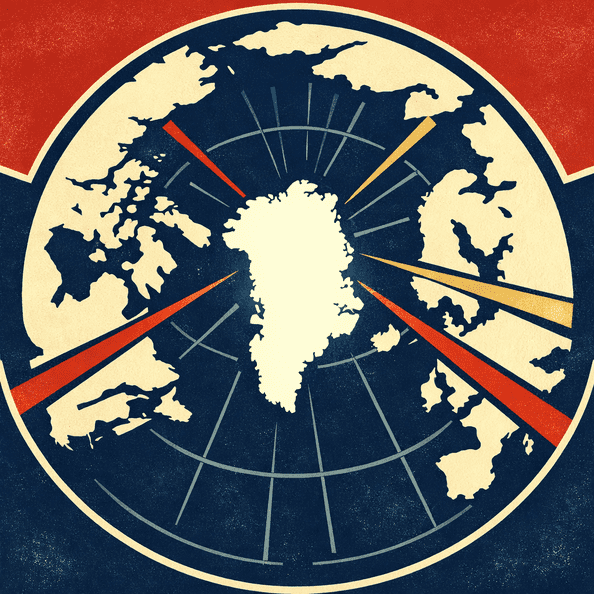
Talk of Greenland becoming America’s next state was never meant to be taken literally, but if anyone could pull that off, wouldn’t it be Donald Trump? In today’s Toddcast, Todd explains how former President Trump used exaggeration, tariffs, and timing as negotiating tools to force serious conversations about Arctic security and global power. The Arctic is rapidly becoming one of the most strategically important regions on the planet—rich in rare earth minerals, critical shipping lanes, and military positioning.
Russia has heavily militarized the region, while China is embedding itself economically under the label of a “near-Arctic state.” Greenland sits at the center of this competition, acting as a geopolitical choke point between North America, Europe, and Russia. By threatening tariffs and floating extreme positions, Trump shifted the negotiating frame, forcing NATO and European allies to respond.
This episode walks through the strategy behind the headlines, why control doesn’t require ownership, and how modern power is exercised through leverage rather than conquest. Understanding Greenland means understanding the future of global security.
🎧 Listen to Today’s Episode
📰 Stack Links
Trump Calls Off Tariffs Over Greenland, Announces ‘Framework’ of Future Arctic Deal
EU Puts Trade Deal With US on Hold Over Trump’s Greenland Tariff Threat
🛒 Shop The Official Todd Huff Show Store
Cool enough for casual, sharp enough for serious. This long-sleeve edition is perfect for layering up or dressing it down — either way, you’ll stay comfortable while reminding the world that common sense still exists.
A classic fit for the proudly un-woke.
📝 Transcript: Why Greenland Matters and How Trump Negotiates Power
The Todd Huff Show – January 22, 2026
Host: Todd Huff
Todd Huff: Well, welcome, my friends. Thank you so much for tuning in to today's episode of this podcast, America's Home for Conservative Not Bitter Talk and Education. As always, it's my pleasure to be here today. You know, last week. Last week I got a text from someone. Someone that I. That I care about. And he had asked me a question. And candidly. I overlooked responding.And listen, I. There's a lot going on here. There has been for a long time. But there's a lot. Of things going on behind the scenes. And I don't want to get into that necessarily, but I forgot to respond. And the question. It was a two part question, of course. There's no way that I could have answered this in text.But I kind of filed it away. And thought, this is something that I might address on the show. Because that's typically how I try to do this. I try to. If someone asked me a question, my thinking is, how can this be helpful to the most people? Because I can't sit here all day and just respond one at a time.I'm happy to do that. But at least I look for patterns or things that other people might want to hear discussed or, you know, expounded upon or whatever. And so I filed it in that category and I just neglected to respond.Today, I'm going to respond at least to half of that. That question. The question that he texted me. He texted me. Well, I guess it wasn't a question, it's just kind of a demand. It says. Explain to me Greenland and Venezuelan.
Todd Huff: Today I'm going to try to explain. Greenland as best as I can. There's news coming out which we'll reference that article where Trump has basically announced victory. Calling off the tariffs. Announces a framework over a future Arctic deal, which answers a lot of the Greenland concerns and where that came from, what the point of that was.I want to look into this. I want to get into this. This article, by the way. Well. It was at the epic Times. But. That's what we're going to reference here and talk about here today in due course. So that's where we're headed, my friends. And. Before we get there. Let's take a moment to just think about and talk about the families who have. Who seem to have a plan that lasts for generations. We all know who some of these families are. They've built. They built a legacy. And they've grown it and it's lasted. Lasted over the course of time. And those things are not accidents, my friends. That's why. That's how full sweet wealth can, in fact, help you. They work with people who want their wealth to make a difference for years to come. Not just to be completely just enjoyed and wasted during this lifetime, but to build a legacy. And so that's where full suite wealth specializes. Their team comes together. And they bring together high level investment strategies, things like private equity, things like private credit, things like option strategies. They combine that with expert legal guidance to help navigate all these complexities so that they can make sure your vision for what you want, both now in the future, because a reality. So if you're looking to do more than just manage money, if you're looking to leave your mark, build something lasting, take a look. At full suite wealth. Visit Fullsuitewealth.com that's Full Sweetwealth.com Build your legacy. Secure your future, okay?
Todd Huff: So I want to talk about Greenland today. In fact, I'm going to see if I can find this article is now showing me that it is not accessible with the link I had given it. So let's see if we can get to it. Another way. Here it is. Yeah, let's. I don't know why, if the link had changed or what, but now I've got it. So this is at the epic times. Trump calls off tariffs over Greenland, announces framework of future Arctic deal. This solution, if consummated, will be a great one for the United States of America and all NATO nations, trump wrote. On Truth Social. So let's. Let's set the stage here first. As to what? Greenland. What is going on there? How we got to this point? What? This is about, and let's discuss this. And I think the way the place to start. And I want. I want you to be mindful of this. I did not come up with this. You've heard me talk about this before. This is, I think, the lens through which all of this should be observed. And and thought about someone made this comment. This was years ago. During Trump's first term, I believe after they watched him. Govern, you know, act as our chief executive and so forth. They made this comment and it really stuck with me, and I can't find who to attribute this to. But I remember this because the quote was powerful. I did not say this. I'm simply repeating it.
Todd Huff: Now, if you want to quote me like Michael Scott quoted himself when he quoted Wayne Gretzky, Where Wayne Gretzky says you miss 100% of the shots you don't take. Michael Scott quoted that and said, you missed 100% of the shots. You don't take Wayne Gretzky. And they attributed that quote to Michael Scott.But anyway, that's. I. I didn't come up with. This is the Point. So here's what the, I think interpretive lens we should be mindful of as we go through this. And here it is.Someone once said, those who like Trump take him seriously, but not literally. Those who hate Trump take him literally, but not seriously. Now. It's also been said the sign of. One of the signs of being an adult is to entertain a thought, having the ability to entertain a thought without accepting it So you don't have to accept that thought. I happen to think that that's profoundly true, what I just read. You don't have to accept that. Just yet. I'm just asking you. Especially for those who hate Trump or just roll your eyes every time. You hear his name or whatever. Feel the need to maybe virtue signal anytime someone mentions Trump or voting for Trump. Just try to see it from this lens for a second. I think that there's a whole lot of wisdom tucked away in that. That's the adult thing to do, is to try to understand this. Again, those who like Trump. Take him seriously, but not literally. Those who hate Trump take him literally, but not seriously.
Todd Huff: And so this is where the issue of, of Greenland becoming the 51st state comes into play. This immediately makes itself known because this, of course, is what Trump was out there saying Greenland's going to make be America's 51st state. Or Canada. Canada was going to be, I guess, our 52nd state. But these, these are the conversations that Trump has and the people who don't like him, and I listen. I'm not even saying you should or shouldn't. You know my position on Trump. I talk about this stuff. Say regularly, but the shows are not typically about Trump per se.It's certainly about things that are happening that involve Trump. And we give Trump a ton of credit for a lot of the things that have improved in the United States as it pertains to border security, the economy, all these things that are headed now in a much, much better direction. The rule of law. Deportations, things of that nature. But people who have voted for Trump, who support Trump, they take him seriously, but they don't literally think that Greenland is going to be the 51st state at the same time. You know, it's like I was. I grew up in a family of storytellers. And there's a. A lot of. And my. My. My best friend growing up in school was quite the storyteller. He can embellish, but at the core of what he was saying, it was never made up. It might have been exaggerated too much. But at the core, there's always a truth. It's not just a story for stories sake. Sometimes it might be. Especially in the Huff family. But I. I grew around. I grew up hearing some stories, and sometimes I remember to my. I would hear something that didn't sound right. . There's some stories I can tell you on here that would be thoroughly entertaining.But I heard them so much as a kid, there were times I didn't. I didn't believe some of the stories. They didn't sound believable. And I kid you not, I would. The story would come up around someone, you know, someone that knew or was around when the story would have taken place. And they said, no, that really. That really happened. Your family's not exaggerating that. I mean, maybe they're exaggerating it, but it happened.
Todd Huff: What? What you're describing there. I remember 1. One case of a teacher. I just. I can't tell these stories.But a teacher that. That my family members had at the school they went to.I remember some of the stories they. They told about this guy, and it sounded completely made up.It sound like it should have been in a movie.And I've had this confirmed by many people. That this. That these things actually happen anyway. But at the core. So. So you can take something seriously without taking it. Literally. Right.And so the people who dislike him. Dislike Trump. And you can. You could argue this both ways.I'm not here to say that you're wrong in this case. I just want you to listen. I'm trying to help explain an issue.So some people may take Trump literally. And if you take him literally, again, I don't know, chicken, egg, which one came first here in this particular story. Do they view the entire world literally? And then when Trump speaks figuratively or with exaggeration, that can I not see past that? Is that why they're there? Or is it a built in excuse mechanism to say he's lying because they try to interpret everything he says literally? I don't know. That may vary on a case by case basis.But if you take Trump literally, then you'll never. And only literally, but not seriously.He's not serious because he's not literal.Maybe those things are inexplicable or in inseparably attached to one another. I don't know. In the minds of people. But if you take him literally, you're never going to see the truth. Or the seriousness that he had about a particular issue. Especially when he's employing techniques that he writes about in his book the Art of the Deal, which I have around here somewhere.
Todd Huff: So that's the lens we have to view this through first and foremost. So let's go back to the core here of Greenland. I would argue that the occupying or taking over Greenland is a 51st state. While there's a part of all of us who voted for Trump who would say if anybody could do something like that, It would be Donald Trump. And there's a part of people who are saying, let's, let's see what Trump's got in store here, because we don't know, there's been things that have happened. That only Trump could accomplish because of his approach and the way that he does things. I mean, you think about, again, some of these things get ignored over the course of time, not by Trump supporters sometimes or they get forgotten about.. But a lot of times they just get lost in the, you know, over the course of time.
Todd Huff: But if you remember, when Trump became president in 2016, the NATO countries weren't really supporting NATO at all, much at all. They were not taking it seriously. The United States was funding the entire thing, basically. Or a huge chunk of it. That all got changed. That all got changed when Trump became president. I remember the idea, the idea of Roe versus Wade being overturned. Seemed absolutely ridiculous. It seemed impossible. But yet here we are, Roe versus Wade. And again, that's through the Supreme Court. But it's through the Supreme Court that Trump appointed three of the justices that Roe versus Wade has been overturned. There's lots of things. There's many things. Peace deals. Hostages released. Things that have historically been difficult to accomplish. Trump has done them. I'm not trying to set him up. Some people set him up. Or talk about him like he's a savior. That's not. I have a savior, my friends. That's Jesus. He's filled that role perfectly. We don't need a savior. We need good leadership. We need people that can get things done. In. Well, in our government and around the world. And Trump has accomplished a lot of these, a lot of these things.
Todd Huff: I mean, you could. You could put again your political perception or perspective. Changes or influences whether you see things as positive or negative. But you look at now Maduro's out of Venezuela, there's going to be some difficulties there. But this is a very hopeful set of circumstances for the people that are there. The brightest ray of hope that they've had in a long, long time. As they've watched the. Well, their dictator be removed from the country. We've got this situation in Iran which is atrocious and terrible. I don't have time today to get into that. That's something I would like to talk about at some point here. But the number of people that have been killed. Lot to thousands and thousands and thousands of people have been brutally killed by their government. The Internet has been shut down.
They've tried to black out all sorts of communications so that people don't know what's happening inside the borders of Iran.
They are standing up against the evil, absolutely evil regime. In Iran, the ayatollahs and the Islamic Republic of Iran.
And they're standing up and they're marching for peace and organizing, and they are pushing back against an oppressive, brutal government.
Todd Huff: This happen? This has happened before in the past, my friends. It happened when Obama was president and he didn't lend any sort of support to these, to these freedom fighters in Iran, the people of Iran.
And it was, it was squash, the rebellion was squashed there. So, again, I don't know what Trump will do.
I don't know what's possible, but I do know having a person like Trump, it opens up a whole realm of possibilities that often doesn't exist.
Because. Our politicians are elected officials oftentimes don't have the strength of character. Or the. The commitment to some of these things.
And again, we can't be the world's police. I'm just saying, some of these things that have been unattainable over time.
Trump has made attainable. So there's always in the back of our mind, the Trump supporters, people who voted for Trump.
When he talks about something like making Greenland the 51st state. We think if anyone can do it, he can.
But the reality is. That it never was about the United States controlling, taking control of Greenland.
It was about the control of the Arctic. And we have to keep in mind, as I've talked about here, Trump's personality, his style, that's not just noise, it is a tool.
Todd Huff: And again, for the people who take him literally but not seriously, they miss this. They miss it. Sometimes intentionally. Some of them do.
Some of them just don't understand it. Here's your chance to understand. Even if you still decide at the end of the day you don't like it.
Here's your chance. I'm offering this to you. So this is a recognizable negotiating pattern.
But what's difficult about the pattern is the pattern is unpredictable. The pattern is itself a wild card.
But we know that this is what trump, what trump does.
And so instead of thinking about conquering lands or taking them in as actual states, We need to think in terms of power in the modern world.
Being about control, being about leverage, being about having a seat at the table. And some authority to set the rules and the terms.
Because the Arctic is full of natural resources, it is a tremendous strategic asset. Greenland is perhaps the biggest one.
Canada's up there, too. Canada falls a lot into this discussion. As well when Trump talks about making Canada 51st or 52nd state, whatever we're up to now.
If you're on Obama's count, we're looking for state 58 and 59.
But anyway, people misread this because again, they take Trump literally and dismiss him entirely because of some of the things he says.
And his tactics, his style and strategy. Are just a little much for them, I guess.
Todd Huff: So here's what happened January 17th of this year. Just five days ago, Trump announced on Truth Social a tariff threat.
Countries in Europe. Countries included Denmark, Norway, Sweden, Finland, Germany, France, uk, Netherlands.
Notice. Notice where they are. Those are the countries in that region. And this is european countries, NATO. NATO countries here.
And they Trump had scheduled a 10% tariff for February 1st. That's just in, what, 10 days, I guess.
And then the tariffs were going to escalate to 25% by June 1. This was all explicitly tied to Greenland.
Todd Huff: And so what this did was that this caused there to be panic, of course, predictably, because they we've witnessed Trump. We've witnessed Trump do these things with tariffs already. Some tariffs are in place and people are feeling the pinch and the pain around the world. Other tariffs were used as negotiating tools to try to get a work on the balance of trade around the world that you, the United States has with other countries and so forth. It was used as leverage for other things. Bottom line, Trump has used tariffs in very aggressive ways, and he's, he's followed through on some of them. He's relented on some of them. He's negotiated. He keeps you guessing on what's exactly going to happen.
So this, of course, a lot of NATO is involved here. And so the NATO secretary general, mark reta, had gotten involved. Gotten involved. So again you got Europe who stunned. Europe freezes trade negotiations between the European Union and the United States, there's talk of coercion. NATO sees the urgency here, and it becomes a top priority because Trump is headed to the World Economic Forum and Davos. He headed there yesterday. Right. Yesterday is when we're setting this all up for. And at that world economic forum, trump had set aside time to meet with the NATO secretary general, mark ruta.
Todd Huff: So after that meeting, Trump announced the framework for a future Arctic Greenland deal. Tariffs have been pulled back. And that's where I gotta pause as I'm looking here at the time. I gotta take a break here. So that's where we'll pick up my friends on the other side of the break.
If you're curious about Kratom, just trying to figure out who you can trust, let me introduce you to Christopher's Organic Botanicals. In fact, let me invite you, in fact, to their weekly tea talk. It happens every Thursday night. That's today, my friends. Thursday, 7pm Eastern. No pressure, no sales pitch. Just real conversation with real people who want to help you understand Kratom.
Todd Huff (Sponsor): What it is, how it's used, how to stay safe, what to avoid. Christopher's Organic Botanicals believes education should come first. You should be educated about this and understand the product and so forth. So you can check that out Thursday, 7pm every week. For more information, go to Christopher's Organic Botanicals dot com. That's Christopher's Organic Botanicals.com. Truth, tradition. Transparency. Time out here for me, my friends. Back in just a minute.
Todd Huff: Welcome back, my friends. Just going through what's happened here, what's being reported in Greenland when I left off last segment. I talked about that there was an announcement made that Trump had sat down during his trip to the World Economic Forum in Davos, sat down with Mark Ruta of the Secretary of NATO Secretary General and they walk away announcing a framework for future deal with the Arctic Greenland. There's no treaty that's in place, of course. No sovereignty change. Greenland did not become part of the United States. No ownership trade of deals, traded hands. There's no public details about this either. But there was an announcement made here.
And so people are wondering, if Greenland didn't change hands, what exactly actually has changed here? This is where I think you have to understand the art of the deal. And I want to go through some ways that the art of the deal, Trump's book, Trump Strategy on negotiation, how that would have applied.
Todd Huff: So one of the themes or tips, I guess, steps in the art of the deal, if it can be worded like that, is to begin with an extreme opening position when you negotiate. So, for example, Greenland is going to be the 51st state of the United States. This is often something that's not realistic. It's designed to bring attention to it. It's so dramatic a lot of times that it is the center of the headlines. It's big news, and it resets. If there's a negotiation going on, it resets the negotiation.
In fact, there's thing called an Overton window. And that's really when you're negotiating. And I talk about this. I don't use that term, but I talk about this. This is what the political left has done. They keep moving further, further to the left, and their starting point becomes so extreme in negotiating something. By definition, if you're a person who says you got to find compromise in the middle, well, fine. I'll just manipulate where the middle is. Or Trump would say, I'll manipulate where we end up by changing where we start out. So I'll move it as far to the side that I can possibly even fathom, and then the middle is going to be closer to what I actually want to begin with.
Todd Huff: And so once the ownership of a country is on the table, kind of a big deal. So that changes things a lot. Then you apply leverage outside of the core issue. That's where these tariffs come in. The tariffs put external pressure on solving this problem, and that's what Trump did. So he's using the tools available to him. He's moved the framework of the negotiation. He's putting external pressure, forcing deadlines. So now you're negotiating against time and not against the principle.
So he got these deadlines. February 1st, 10% tariff. February, June 1st, we're going to have a 25% tariff. So that creates an urgency. We got to find something to satisfy this guy so that we can actually not live in this turmoil.
Todd Huff: And then Trump is in a position again. We're waiting on the details and we'll see where this pans out. Obviously, ownership is something that's not truly on the table here. That was maybe a symbolic thing, or again, moving the frame of the negotiation. But now having American control through NATO. Right. This NATO stepped in, by the way. NATO's not having the ability to tell Greenland what to do. And Denmark, of course.
What NATO is there to do is say, hey, we've got problems between our allies. Let's figure this out so this doesn't become a wider problem that affects the United States, who, of course, is the big boy in NATO. And then all the rest of these countries that are just thrown in here that some of them have really nothing to do with this.
Todd Huff: So it's all about exerting pressure to solve an issue here that Trump thinks is important. We still haven't gotten to why Trump said it's important or why it is important. We're just simply explaining how we got to this point, and we'll get to why it's important here in a moment.
But then you declare victory, which is what Trump did yesterday. We have a concept of a deal. We're going to give the details later. They're coming here in a few weeks as we hammer this out. He mentioned that this is a forever sort of deal. This isn't just something that can be changed willy nilly. This is something forever. So as the details are being hammered out, he's already again putting more pressure on what that's going to look like, casting that vision, and he's never fully abandoned the starting extreme position. That's still on the table. Greenland becoming the 51st state that's again based upon the rhetoric and the position. So this isn't necessarily the rules. These are the pattern of things you'll find if you read the book the Art of the Deal.
Todd Huff: So let's talk here. Well, I mentioned NATO, and I'm going to briefly do this. I don't want to spend a lot of time here because I really want to talk about what's important here with Greenland. So the NATO Secretary General again was put in this position because he works with all the NATO allies. So he's going to bring them, try to bring these people to the table and get this problem solved.
So NATO can talk about this from the security perspective of all NATO nations and how Greenland is key strategically in de escalation of potential future conflict, all those sorts of stuff. He can't actually negotiate Greenland specific things. But you get the buy in of this guy who now has to speak on behalf of these other countries that are kind of pulled into this. There's a lot of leverage there.
So again, it shifted this from US versus Denmark, Greenland, to us cooperating with NATO to solve this larger problem. This is an alliance wide security deal for the Arctic in general.
Todd Huff: So that's kind of how we got here. Now let's talk about what's at stake here. We got some geopolitical enemies that are exploiting this region. And this is an important region, especially as things change here in the 21st century. So we'll get to that. That's where we're headed next, my friends.
But friends, let's face it. Every dollar we spend is a vote for the kind of America we want to live in. That's why we launched Freedom Marketplace. It is a free directory of businesses that align with your conservative values. These businesses have made a promise, a vow. They won't support leftist candidates or leftist causes. And if they do that, my friends, if they're caught, they will be booted out of the directory.
We seek to provide for you a place where you can buy products and services and so forth. Those purchases are made with companies that are pushing in the same direction. They're not going to take those funds, those profits, and fund things that you are completely 100% fighting against each and every day as we seek to regain control of the politics and culture of this country and the insanity that we have had to deal with here in recent decades.
Todd Huff (Sponsor): So if you're tired of funding the woke agenda, visit Freedom Marketplace dot net. That's Freedom Marketplace dot net. It's free, it's easy. And friends, it's a great thing to do. Support local businesses that share your values. And by the way, my friends, you'll find liberty in business for all at Freedom Marketplace dot net.
Todd Huff: All right. So let's talk here. I'm gonna have to square this up or tee this up before we get to the final segment. There's some big names, other countries that are involved in Greenland or in the Arctic in general. Let's talk about the Arctic. You've got Russia and China.
Russia has put a lot of resources and time in the Arctic. In fact, you can make the case that this is the core or one of the core components of the Russian military strategy, future theater, whatever. They've opened bases, reopened bases, built bases. They've got nuclear submarine bastions that are in the area, missile defenses, radar, northern sea route control. That's important for Russia.
This gives them, well, what they're trying to accomplish here is second strike security in the event of nuclear war. And the Arctic as well, part of Russia's space. They want it to be under the control of Russia as much as possible for other reasons as well, but for those main reasons I've listed.
Todd Huff: So China's involved here as well. It's not quite as advanced as it pertains to the Arctic as Russia, but China's got some concerns in this area as well. I'm gonna have to get to those after the break because I'm up against the clock, my friends. Sit tight. Be back here in just a minute.
Welcome back, my friends. Third and final segment of today's program. Just talking here about what's really going on with Greenland, the form of this negotiation, what's going on. And of course, we're looking at this through the lens of a quote that someone said. I don't know who it was. I'm going to see if I can still find who to give credit to for saying this. But the lens we're looking at this through today is the statement that says that someone again, someone else other than me came up with. People who, like Trump, take him seriously, not literally. People who don't like Trump take him literally, but not seriously. So that's a critical lens to see this through.
Todd Huff: So we're going to wrap this up and talk about the importance. I'm continuing this from last segment here in this final segment.
Friends, let's face that there are a lot of companies out there that don't share your Christian values, many of them fighting strongly against those. In fact, the good news is you don't have to invest in them. At 4:8 Financial, they specialize in biblical responsible investing. They'll help screen out companies that go against your faith, your values, create a plan that's tailored to your goals. They'll handle the heavy lifting so you can focus on what really matters.
If you want to see if your current investments align with your values or what degree they do, head on over to 48financial.com todd. Take a quick and easy assessment, and they will help you see to what degree your investments align with your values. Again, that website is 48financial.com todd. 4:8 Financial, because our values matter. And, friends, so does our money, okay?
Todd Huff: So we talked about Russia in the last segment, what they're trying to do. China has ambitions in the Arctic as well. These are two geopolitical foes, Russia and China. China has said it's a near Arctic state. This is more of an economic strategy for China than military bases and so forth, like Russia is using.
They're looking for ports, infrastructure, research stations, shipping access. That's a bigger thing, as some shipping lanes have opened in the Arctic. And then, of course, using those shipping lanes for resources and supply chains. So what they want to do is normalize their presence in the Arctic and make it impossible, kind of embed themselves so that they're part of that equation up there, so that it's impossible to be excluded from using the Arctic later.
The United States isn't just, you know, trying to. When you look at those countries involved, let's say it this way. When you look at those countries involved, we have to be mindful of who they are, what their objectives are, what they're trying to accomplish, what threats they pose to the United States, to freedom around the world, and, of course, by extension, the United States.
Todd Huff: But Greenland has become the choke point. I mean, Greenland is a big piece of land that's between North America and Europe. It can be used for early missile warning locations. It can help control, if you've looked at a globe and you look at Greenland's position, I mean, it's uniquely positioned between North America and Europe. And even getting into the vicinity, you still got a ways to go. But it's strategically in a place that kind of flanks, if you will, Russia.
So there's shipping access, control. It is very, very rich in resources, resources that include rare earth materials, oil, things like that. But there's not much infrastructure that's there. Politically, it's a small thing, but strategically, it is a massive, massive, massively important asset. And so it's critical as we move into the 21st century.
Todd Huff: So for a nation to have power today, you don't need to annex. You don't need to colonialize things. You just need some control. You need some influence in the region. And in fact, having that control without having the land yours is kind of a common way of doing this.
So this, of course, has echoes of the Cold War. For those of us who grew up in the 80s or who were alive in the 80s when the Cold War reached that kind of that frame, Gorbachev and Reagan and Star Wars program and first strike and second strike and all this nuclear capabilities, even back to the 60s, Cuban Missile Crisis, all these sorts of things. I mean, this has echoes of that, especially with Russia under the leadership of Putin and so forth, and what's going on there.
And how much they're embracing freedom versus some of them wanting to regain, well, return, I should say, to communism. A lot of those folks still really revere Stalin and his memory and so forth.
Todd Huff: This is similar in ways to the space race. There's certain strategic importance here. This is going to determine who can enforce trade rules and so forth. This is a pretty big deal when it comes to a strategic asset.
And so, again, it was never about taking control of Greenland and making it a state. It was about negotiating something that was in the United States best interest. It looks like we might have the framework for that. I'm out of time. I just wanted to do my best to explain it. SDG.