The Stack: Why the US Moved on Venezuela and What It Really Means

On today’s show, Todd breaks down the breaking news surrounding Venezuela and the US operation that resulted in the capture of Nicolás Maduro. Rather than reacting emotionally or rushing to judgment, Todd walks listeners through the deeper context behind the headlines.
He explains how Venezuela evolved from a mismanaged socialist state into a criminal narco-regime, why drug trafficking and foreign adversaries matter to US national security, and how China, Russia, Iran, and Cuba factor into the equation. Todd also challenges simplistic claims that the situation is “just about oil,” offering a clearer explanation of the legal, strategic, and security considerations driving US action.
The episode is a calm, principled analysis focused on liberty, authoritarian power, and why this moment matters far beyond Venezuela’s borders
🎧 Listen to Today’s Episode
📰 Stack Links
Maduro Captured: US Operation Southern Spear Analysis 2026
The Latest: Rubio suggests US won't run Venezuela day-to-day
🛒 Shop The Official Todd Huff Show Store
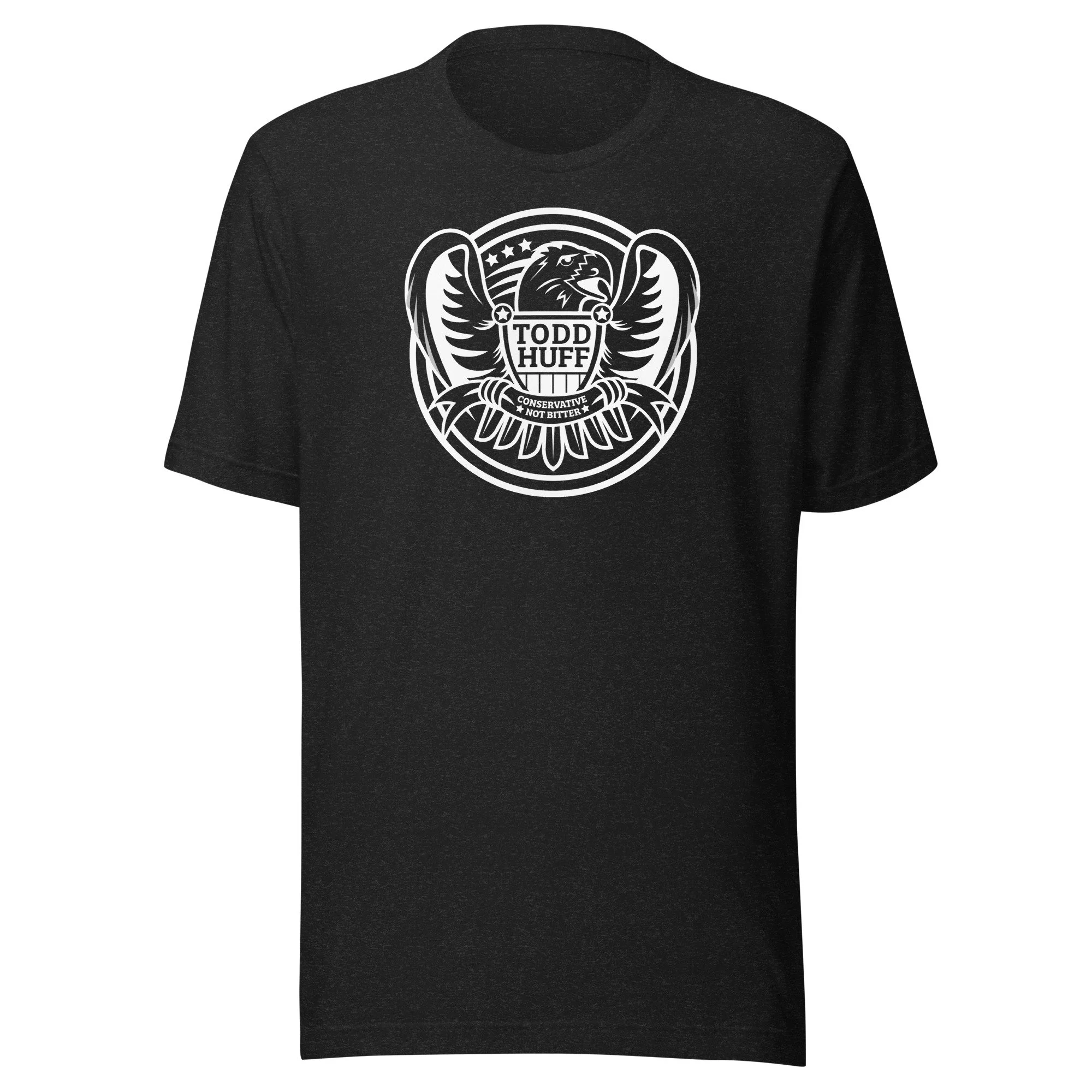
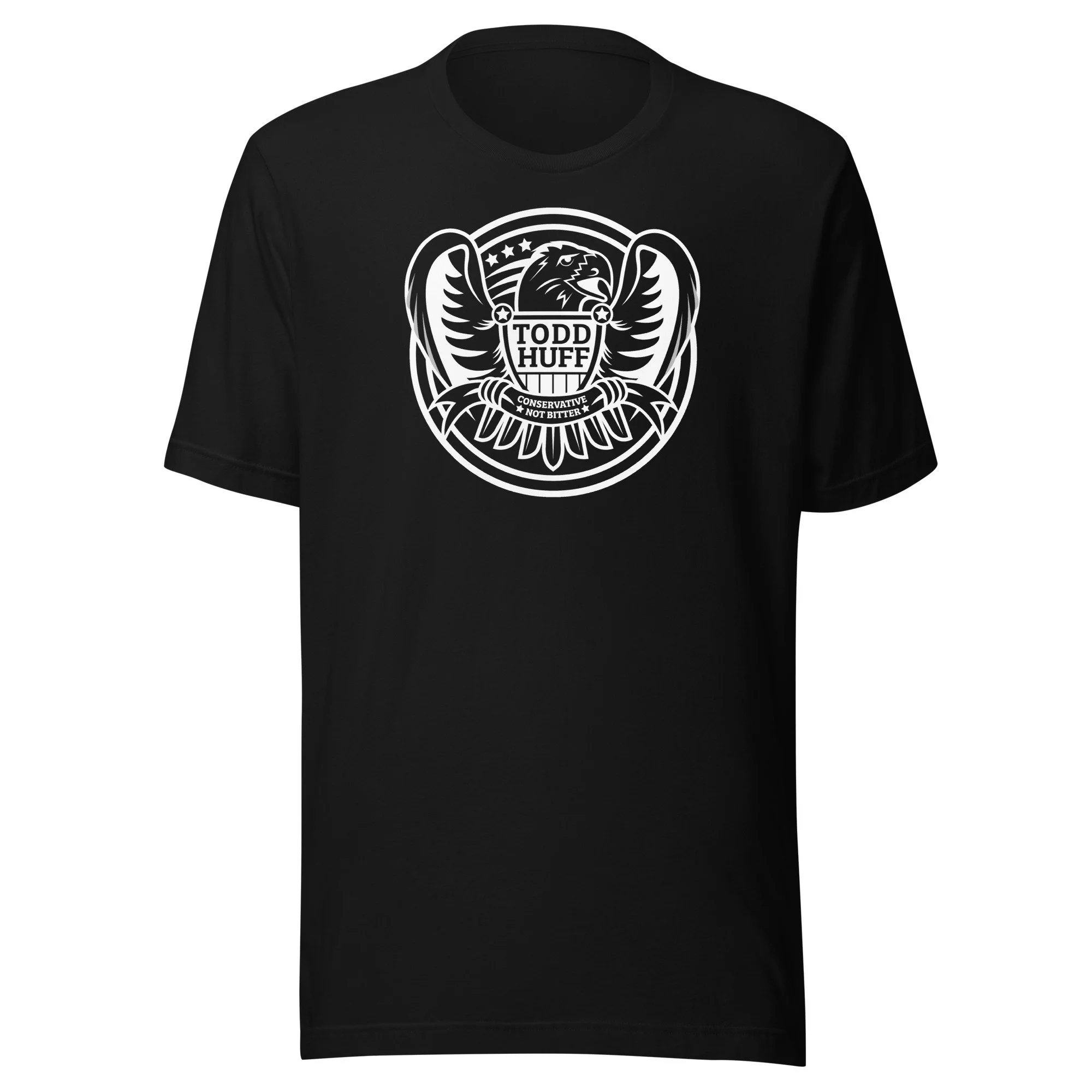
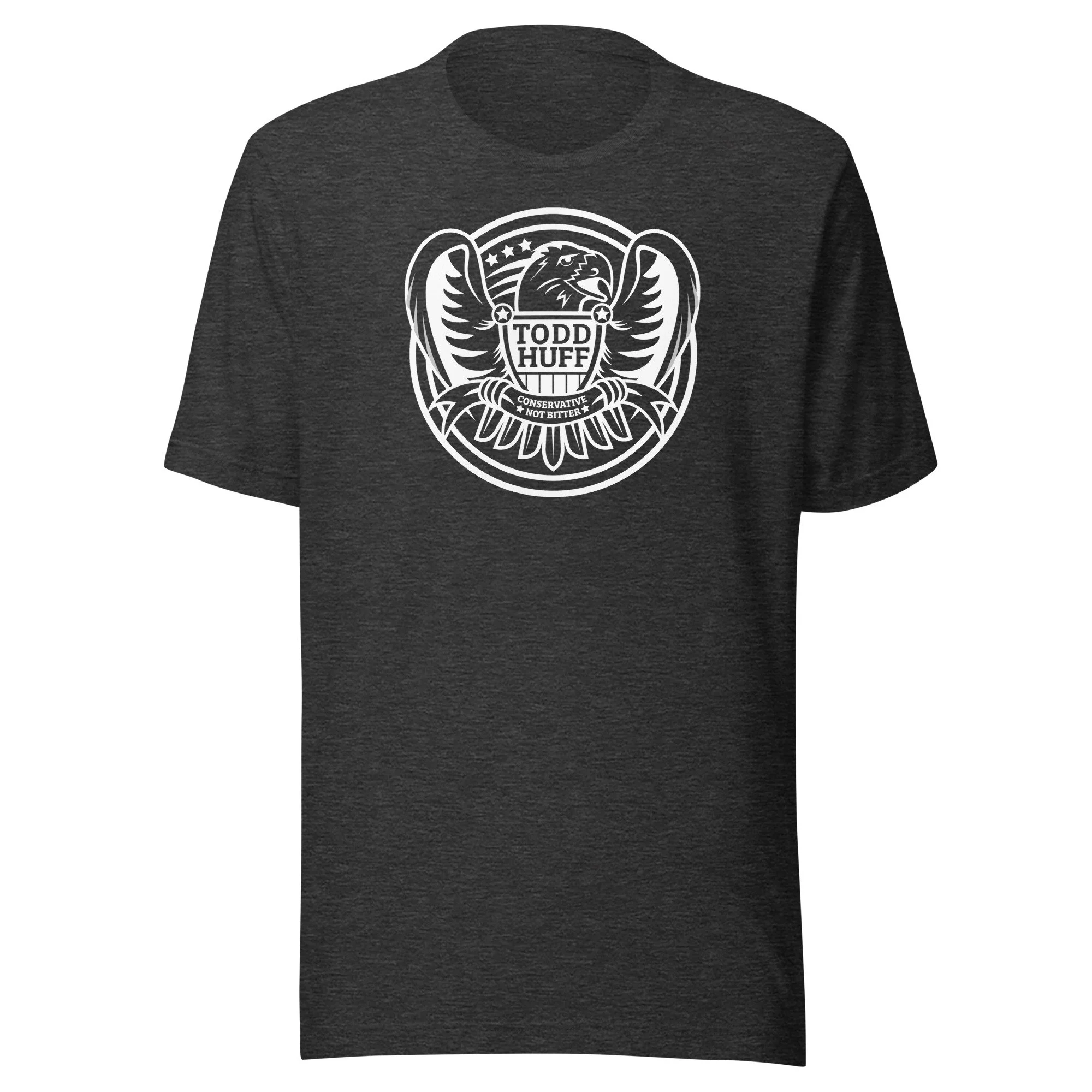
When you want to make a statement without saying a word. This bold Todd Huff Show tee features our eagle-shield emblem in crisp white — the perfect blend of classic style and subtle strength.
Made from 100% ring-spun cotton and pre-shrunk for a perfect fit. Clean. Simple. Confident. Conservative.
📝 Transcript: Why the US Moved on Venezuela and What It Really Means
The Todd Huff Show – January 5, 2025
Host: Todd Huff
Todd Huff: Well, my friends, I hope you had a happy new year and that 2026 is off to a good start for you. We had a nice New Year's here. Of course, there's news that broke over the, I guess, holiday weekend with what happened with Venezuela. Nicolas Maduro. We'll talk about that today, my friends. That's what we're going to focus on.You know, it's interesting to me. Interesting to me how, again, it's fascinating. In this culture where you are, we collectively are given about two seconds to decide what we think about an issue. Something that happens in the news, something that a particular politician said or he did or she did, something, whatever. We're supposed to come up with our opinions instantaneously. That's one of the things I fight on this program. I don't want to have knee jerk reactions.
Todd Huff: You've heard me tell you before. I remember distinctly the day the Supreme Court ruling on the ACA, Affordable Care Act, Obamacare, was released. Wow. That was probably, I don't know, that was a while ago. That might have been, I wasn't quite probably 15 years ago, but maybe 12, I don't know. I remember people outside the court waiting, being handed the ruling and people getting it wrong because, of course, something that Justice John Roberts did, where he changed his vote, they believe. Anyway, the point is I would rather be right and clear thinking on an opinion versus first. Because I'll tell you, I didn't know, and I still don't know exactly all that I think about this. Hopefully some of that'll be worked out today as we talk about it here on the program.
Todd Huff: But my wife and I, we were actually out of town for just a couple days. We do this on occasion, take a couple of days to just recharge and just get away from all the busyness and so forth. Get rid of those crazy kids for a couple days. We love our kids, but, you know, just to get some time and just to relax a little bit. And we were out of town when my wife actually said, had I seen the news yet in the morning. I said, no, I hadn't. And then, of course, she could fill me in what was going on. So I still don't know entirely what I think about this. But I'll tell you what I'm going to do. I'm going to go through this and give you as much background and perspective on this that I can to explain what's really going on here to the best of my ability.
Todd Huff: Now, I will tell you off the top here that there is the, I guess you could say, the public facing side of this. The part of this about narco terrorism and being a criminal state and all that sort of stuff. And there's also a lot of stuff behind the scenes, and that's where you get into, look, some of this stuff is straight, yeah, just probably not true. But other parts of this are probably really some mitigating factors behind the scenes, the circumstances and so forth.This, of course, probably has layers and layers, and we're going to do our best to talk about it today, my friends, as we get here and hit the ground running in 2026.
Todd Huff: So, you know, one of the biggest challenges that we as conservatives have is finding ways to ensure our values align with everything that we do. The way that we live our lives. And look, I'm not saying overly politicize everything. I'm just saying coming to the realization that the things that we believe in can certainly be impacted by the way that we live our life, and that includes the way that we invest our money.
It's what I love about what the team at Four Eight Financial is doing. They specialize in biblically responsible investing. That means they screen out companies that do not align with our faith, with our values, so we're not funding things that go completely against what we believe in. They do all the heavy lifting for us, helping align our investments with our purpose, with our goals.
Todd Huff: And the best part is that they have a tool available on their website for you to go to and to complete a quick assessment. It's painless. It's easy. I did it. Go to 4eightfinancial.com/todd. That's the website. 4eightfinancial.com/todd. Four Eight Financial. Because our money should be working, my friends, for our values. All right, so let's kind of set the stage here as to what happened, what's happening, or what happened, I guess, in Venezuela and I guess the fallout and what happens next, all this stuff. So Venezuela is not just a foreign policy story. This is, oh boy, there's layers to this.
Todd Huff: And I would say at one layer, this is a discussion of liberty versus authoritarian power. Because at its core, we know that Venezuela is a leftist regime. Venezuela is, I mean, a socialist, Marxist nation. Maduro is a bad guy. Chavez before him was a bad guy. This is not simply American meddling in the affairs of another nation around the world. This is what happens when centralized power hardens a nation into an outright criminal state. And the United States is responding to a problem. Responding to a problem that is rooted in security, rooted in our national interests, not just ideology.
Todd Huff: So while this is in one sense the leftist ideology operating in Venezuela, it's not just about an ideological difference. This is about when that ideological difference leads to a hardened criminal state. So Venezuela has become a state that has, of course, become authoritarian. And as it is always the case, right, what's the old saying, power corrupts, absolute power corrupts absolutely. And so the more power an individual is given, the more authoritarian and candidly mad, not angry mad, just crazy mad that these folks become over the course of time. They're allowed to do, because they're authoritarians, they're allowed to do whatever they want.
Todd Huff: In some extreme cases, they are worshipped. I'm reminded of Kim Jong Un and his father Kim Jong Il before him in North Korea. These lunatics actually, in some instances, make themselves or try to make themselves a god, which is patently ridiculous. It really is absurd that this happens, but it does. It does happen.Almost part of me thinks they almost want to see what they can get away with. How much crazy stuff can we do before these people are going to unite and overthrow our nonsense. I almost wonder if that's the thinking sometimes.Now, you've heard me talk about left versus right and the political continuum, the framework that I use when I talk about a leftist.
Todd Huff: I don't view or I don't use the traditional political science ideological continuum. When I talk about these things, I don't have at one end, I reject the continuum that has on one end communism on the far left and on the other end fascism on the far right. I reject that continuum. In the continuum I think that is correct, actually, I know what's correct, views politics through left versus right on the continuum. The left end of the continuum is authoritarian, the centralization of power, that sort of thing, government control. On the right end of the continuum, truly at the far right end, you have absolute anarchy, where there's no control, there's no law and order, it's every man, woman, and child for himself sort of thing.
Todd Huff: And the place that conservatism falls is on the right end of that spectrum, but not, obviously, to anarchy. So conservatism says, look, we want the smallest government we can have that allows us to have the rule of law and order and safety and structure for people to be safe and to be able to operate and to live with some level of a functioning government without giving up their liberty. And so power is centralized on the far left into that spectrum. And when power centralizes, dissenters must be suppressed. They must be silenced. They're often abused. They're often oppressed. That is what happens. The resources must be controlled.
Todd Huff: Because here's what happens in these heavily authoritarian regimes where they have control, they want to control everything. What happens is you have a controlled economy. Which a controlled economy is bad for prosperity. It's bad for liberty. It's bad for having enough. It always leads, it always leads to there being not enough resources. The resources are controlled and managed, and they're viewed as something that must be kind of divvied up by the state. Each person gets this much of this, and we're going to control that instead of allowing, simply allowing, the free markets to go out and find ways to provide more resources so that it's not a fixed, controllable kind of metaphorical pie here that we're talking about. And so that's what happens first when you go to the left on the political continuum, as Venezuela has.
Todd Huff: And at some point, the opposition on that continuum, well, if you're far left on the continuum, if there's someone in the opposition party, it becomes a criminal activity.And this is what happened, effectively, in Venezuela.
Todd Huff: So who is Nicolas Maduro? Maduro is, of course, the leader of Venezuela. He was until the United States raided and captured him here a couple of days ago. But he's the ruler, the leader of Venezuela. But the United States does not treat him, obviously, based upon what happened here, as a normal head of state. The allegations are that he is a, well, either the leader or at least a protector of a state enabled criminal enterprise. So it's not just that Venezuela is a bad government that's being run by leftists who, in many cases, are starving their people, terrible things like that, things that are internal. Now it's becoming, it has become something that is affecting law and order outside of its borders. Now, suddenly, that becomes a problem for the rest of the world, and particularly in the United States, because this is in our hemisphere.
Todd Huff: There's a lot that stems from this, right? Of course, drugs and violence. And you've got, of course, you've heard Trump talk about when he's talked about illegal immigration, the number of people that are here in this country illegally who are from criminal gangs in Venezuela. Or they are from, gee whiz, sometimes Maduro released prisoners, violent prisoners that were allowed then to come into this country. It's gone from just a mismanaged state with a bad ideology to what is referred to as a narco state. Narcotics, drugs, criminal enterprise. So what does it mean to be an international narco trafficker? Because that's the allegation here. Narco state, narco trafficker for Maduro. That's not just a slogan. That is actually a classification in the world of legalities.
Todd Huff: That means someone, someone who, in the case of Maduro, either knowingly enables or protects drug trafficking. They use state power, government power, that can involve the military, the police, the courts, whatever, to help in enabling and protecting these drug traffickers. They facilitate cross border narcotics movement. That is, of course, a factor. You will remember some of these boats that the United States has struck coming from these waters in Venezuela. And this, of course, all impacts United States security. This becomes at some point, it's not just that you're mismanaging your own country. You're now actually impacting the sovereignty, the security of other states in your region.
Todd Huff: Now, this doesn't necessarily mean that Maduro was personally trafficking the drugs. What it means is that he was using his power to make it easier for drugs to be trafficked by some really bad people. Now there were indictments from the United States Department of Justice that date back to 2020, back to the end of Trump's first term in Washington, D.C., in the White House. There have been Treasury sanctions describing state linked trafficking networks. There have been guilty pleas by senior Maduro, well, folks on Maduro's side, they have pled guilty to crimes of this type, these types of crimes. So they've developed a type of evidence here, evidence that suggests that there were airstrips.
Todd Huff: There are airstrips in Venezuela that have been protected by the military that are being used to traffic drugs. That there are corridors that are controlled and protected by the Venezuelan military in order to get drugs trafficked outside of their nation. And, of course, fast tracking here to the United States. There were orders, allegedly, according to evidence, that the Maduro regime had told other senior officials not to interfere with these activities. So that being said, there's not a single piece of evidence or a document that exists that's a smoking gun here.There's a heavy reliance on witnesses who are cooperating with our government, their intelligence assessments.
Todd Huff: You've heard reference to the CIA, of course. We've got military operations now. And there's a corroborated, they have corroborated the way that this network has been operating in Venezuela, in South America. And I say South America because it actually expands, extends beyond just Venezuela. In fact, if you look at the documents, you'll see a reference to an organization called FARC. Now, I'm not going to read, that's an acronym for a Spanish named organization that is a Marxist guerrilla organization that was founded in Colombia. This organization funded revolution through the sale and distribution and trafficking of cocaine. They had been designated a terrorist organization.
Todd Huff: And they are now involved in, well, they have been involved for some time, organized crime. Now there was a, I guess, what do you want to call it, a negotiated agreement within Colombia in 2016 that officially demobilized the criminal, supposedly the criminal element of FARC. In fact, FARC became a political party within Colombia. I don't know what its name there is. But basically, the way that it was operating in Colombia to fund revolution, that has been stopped from the official organization. But there were people in the organization who didn't want to stop. Just like anything else, right? You have the group that they come to a negotiated settlement, end of their official existence as an internal terrorist organization, this guerrilla organization in Colombia that's pushing Marxism. They say, fine, we'll get into politics. We'll stop that operation.
Todd Huff: But there were dissidents. There were people within that group. When they disbanded, they said, listen, we still believe in this revolution. We still believe. We're highly committed to the cause of Marxism.And so there's these factions, these people that still exist. They formed criminal enterprises and groups. The same people exist looking to have these same routes, drug routes protected and so forth. And they said they have the same drug economy.And so the drugs are actually, I've done a lot of research here, from what I can understand, that drugs are actually being grown and produced, I guess, in Colombia.
Todd Huff: Where Venezuela comes into this is that Venezuela, the government, protects basically the passage of these drugs from Colombia out to ultimately here and other places, I guess, in Central America and so forth. The distribution, the trafficking of these drugs outside of South America. And if you look on a map, you'll see an extreme northern South America. You'll see the nation of Colombia, the nation of Venezuela. They share a pretty large border. And so it's jungle terrain.
Todd Huff: But they've been working, these FARC revolutionaries, these Marxists that are still kind of operating that way, they're working with the Venezuelan government. Because I initially thought, wow, is Colombia going to be someone who's next? Well, Colombia is a little bit different. Colombia's relationship with the United States is one of cooperation.And they are fighting, they're trying to identify and stop FARC, whereas Venezuela has been enabling them to traffic and move the drugs through the networks that are allegedly protected by the Venezuelan military. So a lot to unpack there. That kind of gives you a little bit of a framework for where we got to on whatever that was, the morning of January 2nd, I guess, or 3rd. Second or third anyway. So I got to stop there because I'm up against the clock.
Todd Huff (Sponsor): My friends, before I take that much needed time out here, friends, there's a lot of confusion out there about kratom. You've probably read the headlines, heard the stories, and most of those stories are based on synthetic junk, garbage that isn't real kratom at all. Real kratom is tested, handled with care. And that's exactly what you get from Christopher's Organic Botanicals. Family run company. They partner directly with farmers in Indonesia. Every batch is lab tested. There's no chemicals, no fillers, no shortcuts. This is a trusted herbal option that's been used for generations and a real alternative for people looking for something that doesn't come with a pharmaceutical warning label that is a mile long. You can start with the kratom starter pack. Use coupon code TODD HUFF. You'll save 10 percent off your first order. Visit christophersorganicbotanicals.com. That's christophersorganicbotanicals.com. Coupon code TODD HUFF saves you 10 percent off your first order.Truth. Tradition. Transparency. My friends. Time out for me.
Todd Huff: Back here in just a minute. Welcome back, my friends, to the Full Suite Wealth Studio. Again, my pleasure to be back at it today. We've had two short weeks. You know what, really quickly, before we get back into this, we've had two short weeks.Of course, Christmas week, we were here Monday, Tuesday, Wednesday. New Year's week, Monday, Tuesday, Wednesday. We took off Thursday, Friday, both of those weeks. And so we are back at it here, my friends.
It reminds me, as I think about the holidays, I didn't talk about this. This is a little bit off topic. So hang in there with me. I'll just talk about this for a moment.
But for those of you who have listened to this program for some time, you may have pieced together, if you've listened to me talk about some of the teams I like, you may have noticed or may have figured out that I had a crisis on my hands on New Year's Day.
Todd Huff: Because I'm a fan of the Alabama Crimson Tide. And I grew up a fan of the Indiana Hoosiers as well. I'm not far from Bloomington. I'm going to say 35 minutes, I guess, something like that from campus.
And we've been to football basketball games there. IU is not, has not been a football school until some guy strolls in that he says, google me, I just win. Name is Kurt Signetti. Fantastic football coach. Turned a program around in ways I did not think possible.
IU football is one of the worst programs. And I'm not saying this to be mean, just as a matter of fact, based upon the data, IU football is one of the most, it was, it was at one point it had the most losses in Division One football history.
I think because of their success, someone has passed them. So there may be second most losses all time or something like that.
Todd Huff: So I was in a bit of a crisis. Now, I'll be candid. I was always more of an IU basketball fan growing up. Bobby Knight being the coach. Steve Alford, Calbert Cheaney, all those folks back in the day.
Keith Smart hitting the jump shot to beat Syracuse in the 1987 national championship game. I mean, take your, lots of Alan Henderson, lots of Hoosier greats, Isaiah Thomas in the early eighties.
But anyway, it was tough. I didn't know. I truly didn't care who won the game. IU thumped them. IU looked, I didn't, I've watched Alabama football pretty consistently for twenty some years. And I have never, I don't, I am not aware of a single game that looked like that.
Now, there's other problems that Alabama has, but that program, it was interesting to watch what has historically been the worst college football program, Indiana University, literally take out the most dominant college football program for the past roughly twenty years in the Alabama Crimson Tide.
Todd Huff: Of course, Nick Saban's gone. We're in the era of NIL and all that stuff. But the bottom line is, it was a remarkable game. And I was pleased to see the Hoosiers.
I'm pulling for the Hoosiers. I told folks, whoever won that game between my Crimson Tide and my Hoosiers, that's who I was going to root for.
So it's a remarkable thing here to witness, and I enjoyed it. But they thumped the Crimson Tide over the weekend, and I was really neutral. I really was.
I think maybe slightly wanted to see it for IU. Alabama's been there.But you know, I'm a guy who's, I've loved Alabama football. My grandpa, it was a team that he had interest in, and so I just kind of picked it up that way.But regardless, just wanted to mention that. Go Hoosiers. Go win this national championship here. That would be a phenomenal story. Absolutely phenomenal story.
Todd Huff: But let's get back to it here. Let's get back to this discussion about what's happening in Venezuela and why Trump sent in, well, the military to capture and bring Maduro and his wife to the United States.
So I mentioned before the break the cocaine production is primarily coming from Colombia. Colombia is the world's largest cocaine producer.
I mentioned to you FARC and the people who are still down for the cause, who are still exporting the drugs, and they partner with Venezuela. Venezuela is not the factory producing the drugs.
Venezuela is the, I guess you could say, the hallway through which the drugs travel to get from the metaphorical kitchen out the front door of the house.
Todd Huff: So Venezuela, again, just to kind of quickly go through this, the coca is grown in Colombia. There's armed groups like FARC or the dissidents that remained as part of that Marxist revolutionary group in Colombia that are still working to traffic these drugs, this cocaine.
It's very expensive. They're trying to protect their products, so they're looking for safe routes to export the stuff. And they move the drugs east from Colombia into Venezuela.
That's where Maduro's regime kicks in, allegedly. They protect the airspace. They protect the ports. They give them blind spots on radar. They tell basically the government not to interfere.
From there, the drugs can move north into the Caribbean, to Central America, Mexico, and of course here in the United States. And now that becomes our problem, right? Or at least you can see the argument.
Todd Huff: Now, it's Venezuela, not Colombia, that's the target. Colombia, as I said, actually tries to fight the traffickers. They cooperate with the United States. They extradite criminals.
Venezuela doesn't do any of that. They shield traffickers, allegedly. They don't cooperate. And they align with our adversaries.
Now that's where this gets even deeper. Because when you look at the power struggle and the problems in Venezuela, you'll also see some American adversaries being introduced into the story.
China gets involved with Venezuela. China's, of course, a geopolitical foe here, or at least a threat to us geopolitically.
They provide loans to the Venezuelan government, who is, of course, absolutely mismanaged. It's a disaster because of the Marxist socialist policies they've enacted there.
Todd Huff: They give them loans that Venezuela then basically gives collateral. Oil. The loan is backed by oil.
And so this gives China long term leverage and it gives them control over oil exports from Venezuela, who, according to reports, has the most known oil reserves in the world.
So this keeps Venezuela dependent upon the Chinese. When you're dependent upon the Chinese, they can begin to exert influence and control.And that's not good, especially in this hemisphere, for the United States.You've got Russia involved. Russia has some sort of military alliance or partnership with Venezuela.And then, of course, when you have that sort of thing, you go back to the Cold War era.
Todd Huff: Remember the USSR, the Cuban Missile Crisis? Now, that was closer to the United States' back door. Cuba's ninety miles from Key West. Venezuela's further south.
But Venezuela, heaven forbid, if the Russians, if this got really dicey here and you know there's a conflict we could face, a missile strike from Venezuela much more quickly than we could face a strike coming from Russia.
So there's that again. Not that that's anywhere near happening. It's just these are the threats, and the people protecting this country take those things very seriously.
But not only is there a Russian and a Chinese influence in Venezuela, there's also an Iranian influence in Venezuela.
The Iranians have helped teach the Venezuelans how to avoid, well, how to do things on the down low, I guess, how to evade sanctions.
Todd Huff: They've provided them with some additional logistical support. They've given them some insight into how to manage sanctions and so forth and how to do some of these things behind the scenes.
And of course, we've got Cuba as well, who has a partnership, a relationship with Venezuela.
They have basically shown the Venezuelan government how to do communism correctly, I guess, in the sense of controlling what happens when it comes to your people and opposition and so forth.
So, gotta take a time out. My friends, running long this segment.
Want to remind you, if you're putting your logo, if you have a business, if you work in HR, if you are a business owner, if you're in marketing, if you're looking for a place where you can put your logo on almost anything, check out Red, White, and Brand.
Whether it's apparel, trade show materials, promotional products, print, if you're looking to put your logo on something, Red, White, and Brand is here to help you.
RedWhiteAndBrand.com is the website. Promo code TODD will save you ten percent on your first order. RedWhiteAndBrand.com. Promo code TODD. Time out for me, my friends.
Todd Huff: Back here in just a minute.
Todd Huff: Welcome back, my friends. Time flies when you're having fun. Doing our best to set the stage for what's happening in Venezuela and why the United States decided to go in and capture Maduro. Of course, there's all sorts of problems surrounding this. And of course there's this fury, I guess, emotional outburst about Trump's comments saying that the United States is going to effectively run Venezuela for a period of time.
Which again, if you take its leader, I mean, you're going to have to figure something out here. There's going to have to be some sort of a transition. This is just not something that is no big deal. So obviously that doesn't come as a surprise to me at all. I was surprised to see that we did this, and I'm still not entirely sure all the things I think about this, but I'm trying to paint the picture so that we understand what's going on here.
Todd Huff: And friends, let's be honest. When your financial world starts getting a little more complicated, you need more than one size fits all advice. That's where Full Suite Wealth shines the brightest. Their team specializes in working with families and individuals at your level, offering personalized guidance that goes far beyond the basics.
From private equity, private credit, to options strategies and coordinated legal planning, Full Suite Wealth helps you see the big picture and make confident decisions about your legacy. It's all about having a dedicated team guide you every step of the way so you can focus on what matters most, your family, your goals, your future. If you want real confidence in your financial life, check out FullSuiteWealth.com. Again, that's FullSuiteWealth.com. Build your legacy. Secure your future.
Todd Huff: Okay, so you hear a lot of people say this is about oil. And this can be so deceiving or misleading. Let me tell you what that doesn't mean. This isn't about the United States stealing oil. This isn't about us, the U.S., going down there with the intentions of simply taking over the oil and profiting from it.
This is about, again, I painted the picture as to what the legal justification is here. So we don't just have a government that is mismanaged. We have a government that is acting like a criminal rogue state that is putting other nations at risk because it refuses to act in a way that protects the people of other countries. These are real problems. People die from this. This creates all sorts of crime and problems in these other nations.
Todd Huff: And Venezuela has simply allowed it to happen because it's, well, it's a financial benefit to them. So the degree that this is about oil is the strategic leverage that this could have. And again, we mentioned China, China and their partnership with Venezuela and the way that this whole entire scenario has kind of gotten to this climax.
That's not good, having Chinese influence over the oil. Now these are other factors that had to be discussed and considered. And candidly, there's probably others that we don't know about. Oz mentioned to me election interference. That could certainly be a factor here. There could be other things happening that we don't know that may have moved this to the top of the list to be addressed immediately.
But who controls the production and the exports, the exporting of oil, is a big factor. And where that money goes and what it's being used for certainly matters. If it's used for things that are directly opposed to U.S. interests, that can be something that our government can and should have a concern about.
Todd Huff: This is, it's a good thing if we stop oil from funding authoritarian government survival. There's a lot of problems that stem from authoritarian governments, not just within their borders. But you think about things like illegal migration, just migration in general, people trying to flee from that, human rights, all those sorts of things.
So why is this a direct risk to the United States? Number one, you can't have a state enabled situation or circumstance where drug flows are protected by a nation, by the government. That gives them stable routes. That allows them to send more, higher volume, and it's harder to stop that. You need cooperation from other governments, not the provision or allowance of these things to happen.
Todd Huff: A criminal state aligned with hostile powers, when those converge, that creates a problem for the United States. Organized crime combined with geopolitical factors can be a big, big deal. And it creates an environment that creates real threat to the United States of America and her citizens.
Now, when you have a safe haven, you have all sorts of things that are allowed to happen. Protection of these groups, these drug runners, intelligence cover. There can be the creation of false documents, money laundering. I mean, the list goes on and on. It destabilizes the region. We talked about migration, people wanting away from this stuff. Corruption within the nation begins to spread and corrupt the area. The cartel, which is a big, big threat, begins to spread.
You normalize criminal sovereignty. If states can do things like run drugs, should they still be treated as legitimate states or as something else? And at some point, international order begins to collapse.
Todd Huff: So that's all the time I have. I had some other things that I wanted to get to, but I just am out of time. My friends, I hope this helps frame the issue and what's going on there. But I gotta run. Thanks for listening. SDG.